Exchange Value Intercultural, 2015
Back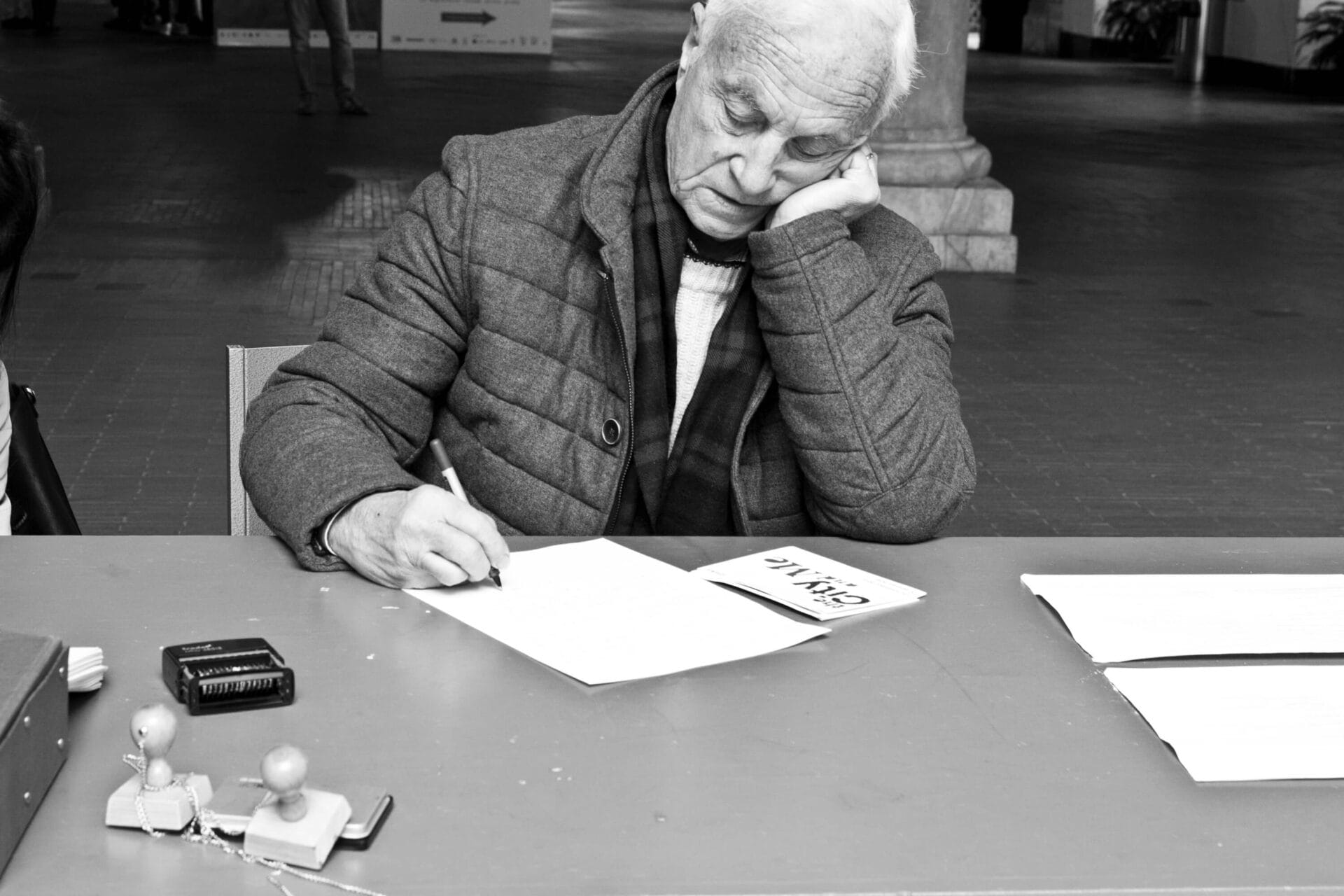

The occidental definition of culture includes aspects such as the customs, habits, practices, daily rituals, clothing, societal values and behavioral rules.
When people migrate to a country with a different cultural identity, their experiences of cultural assimilation vary: some people don’t want to adopt the culture of the new country, others assume the dominant aspects of society and conserve their own culture in private, and others forget their origins. Often, people in the destination countries try to make immigrants adopt the values, norms and behaviors of the destination country.
This is a contemporary mode of colonization.
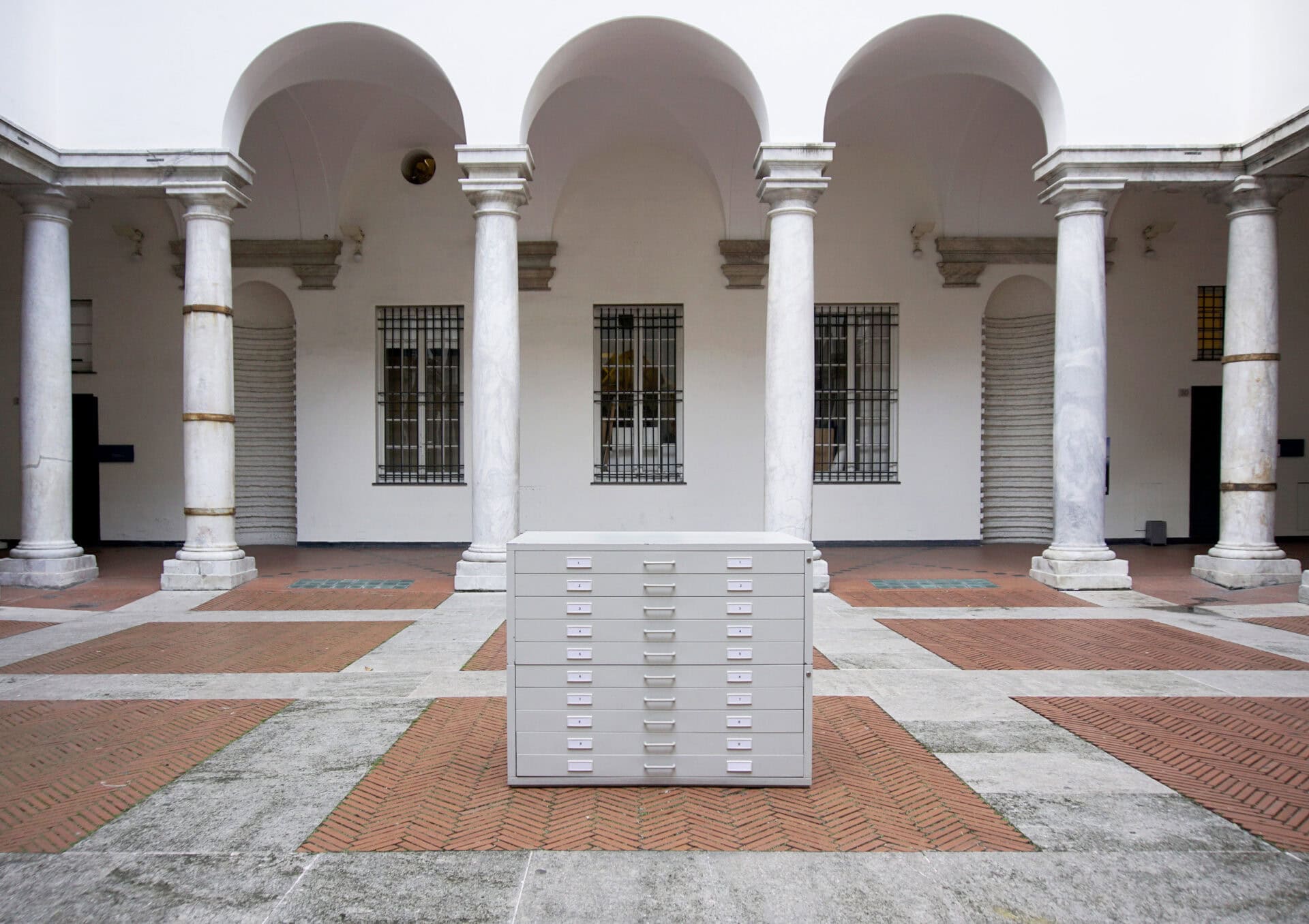
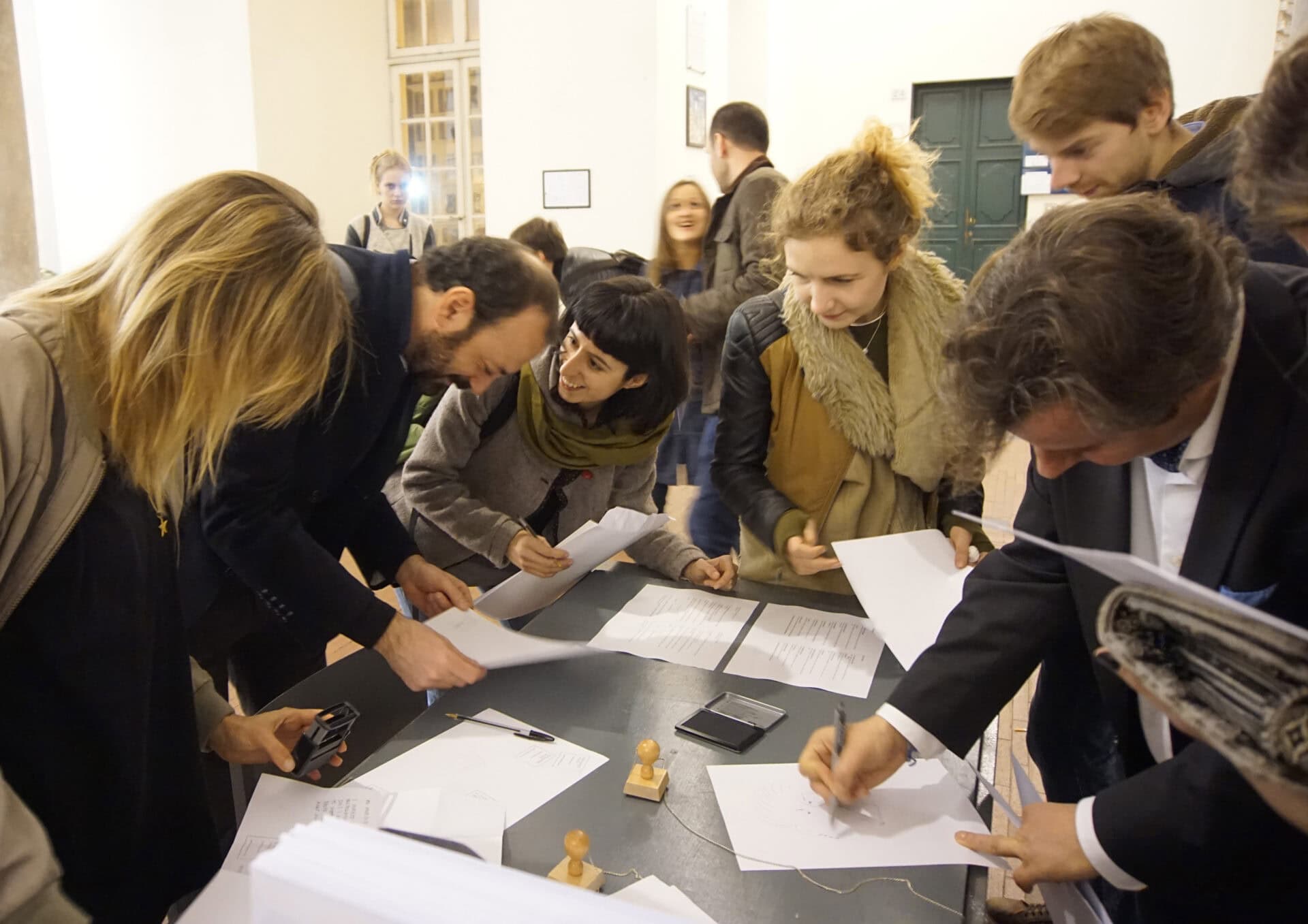
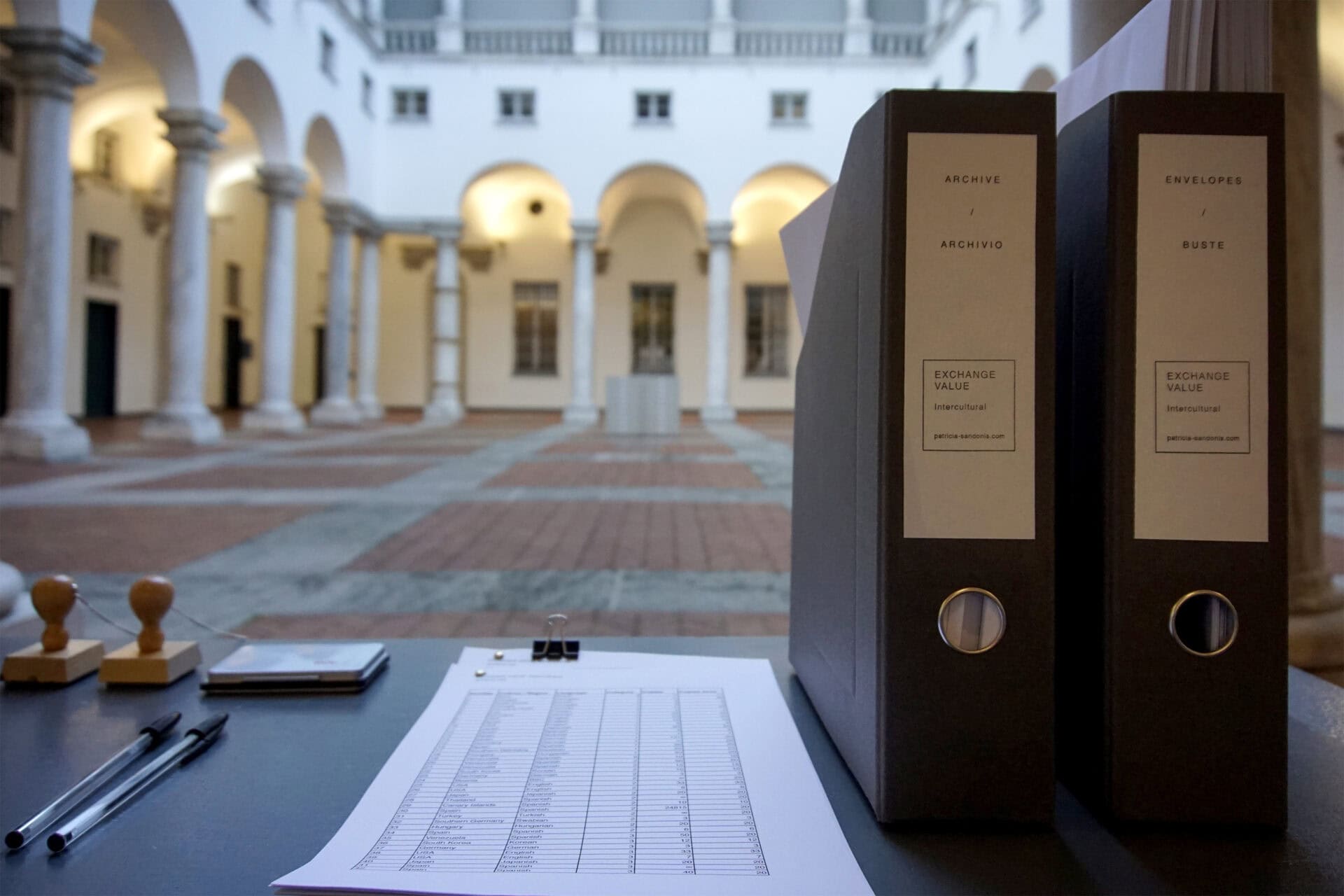
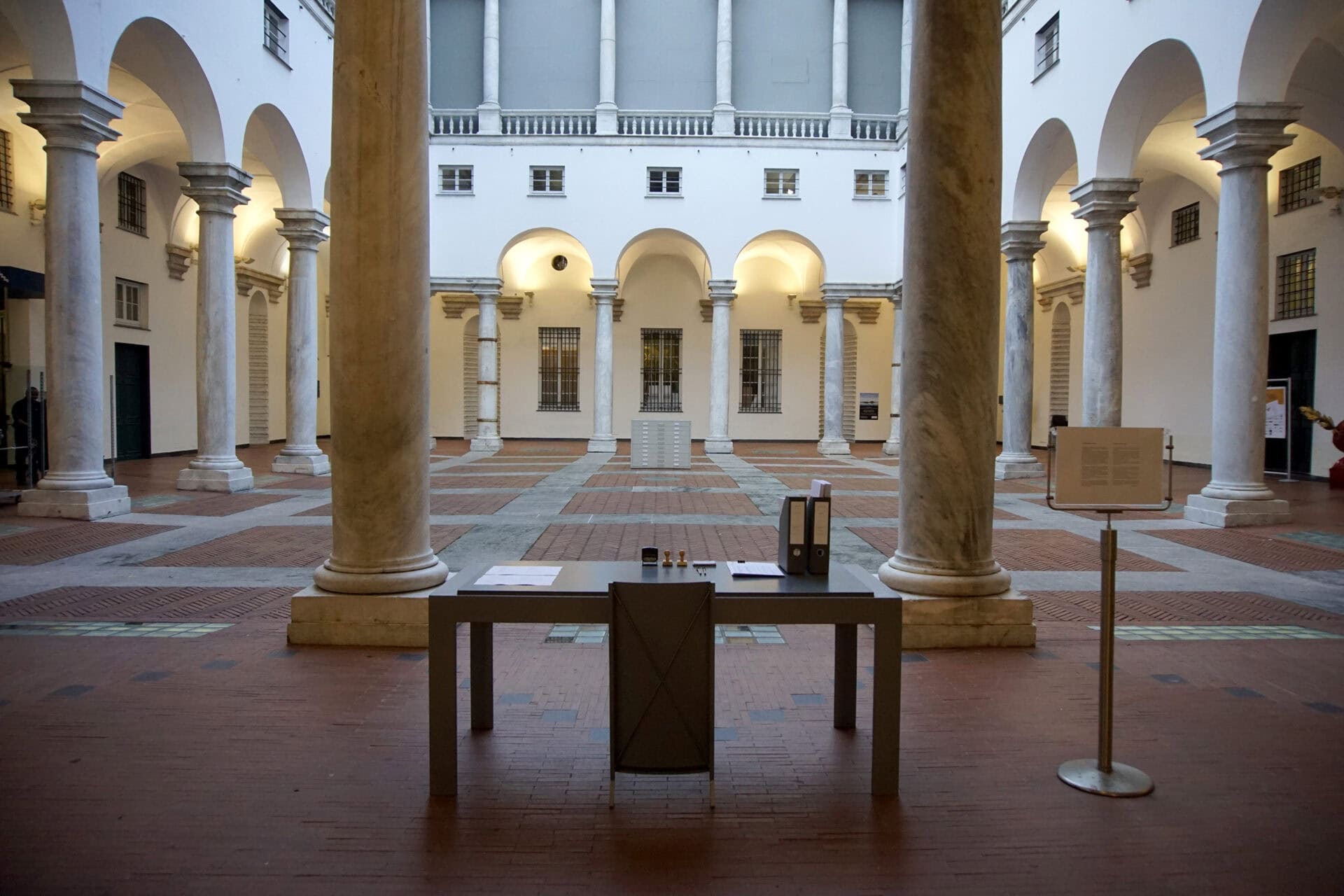
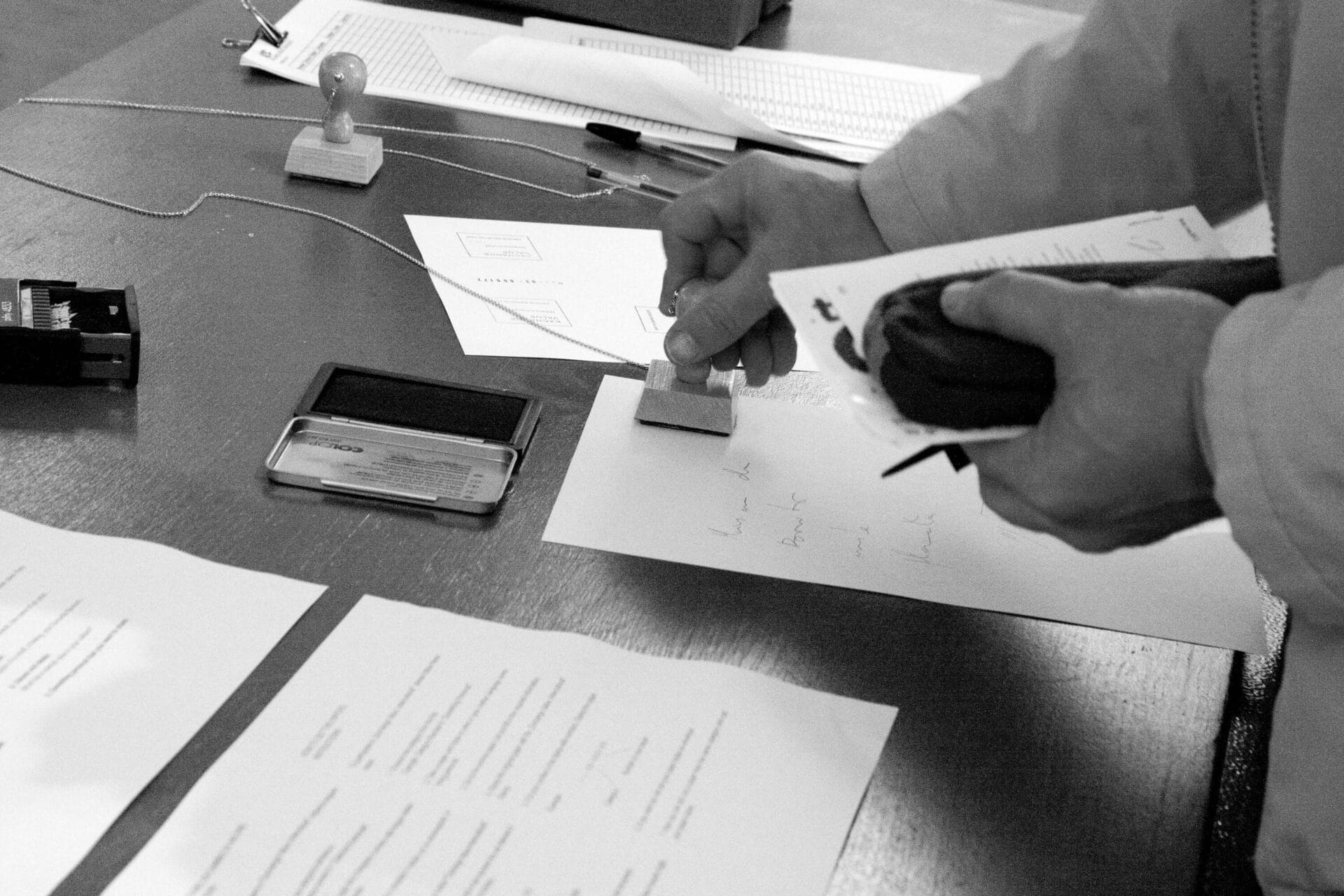
Exchange Value. Intercultural depicts a scenario reminiscent of an immigration office in Germany, where a protocol is filled out in order to “get a paper”. This protocol includes questions like: Write the text of a popular song from the place you come from, or describe how to behave while eating, etc. After doing this, participants are welcome to exchange their own paper for another one inside the archive, where there are many papers written by migrants living in different countries in Europe.
What would you do if you received a hand- written paper, validated as an artwork, in a language that you cannot read or understand?
Exchange Value. Intercultural is about processes of cultural assimilation and cultural hegemony in the context of the current situation concerning refugees and migratory movements in Europe and the role that bureaucracy plays in these processes in order to propose an intercultural way of acting.
In this context, the artist takes the role of a fictive state: she decides on a protocol to follow, gives instructions for filling out the paper form, explains how to organize the papers, how to archive them following a system, and validates the papers as an artwork with a seal.
