Fortuna Populi, 2014
Back


I am very interested in the ways in which a country, a city, a town, a community, or a soccer team is represented. There are thousands of flags, coats of arms, and animals that are a representation of a group of people that have something in common.
I’ve never been able to identify with any form.
I’ve lived in cities represented by a crown, lions, swords, stars, bears, a horse, a fire-breathing dragon…
It is the repetition of representation and the desire to belong to a community that gives value to the form. However, these forms of representation have served not only to represent a community but also to differentiate it from others. So many barriers have been created between forms that, instead of uniting people, discriminate against those who do not belong to the group. There is no sense of community, but rather a sense of belonging. A sense of community implies solidarity, respect, and a desire to achieve the greatest possible good for the community. A sense of belonging is individual, and what matters here is that one’s self belongs to the community.
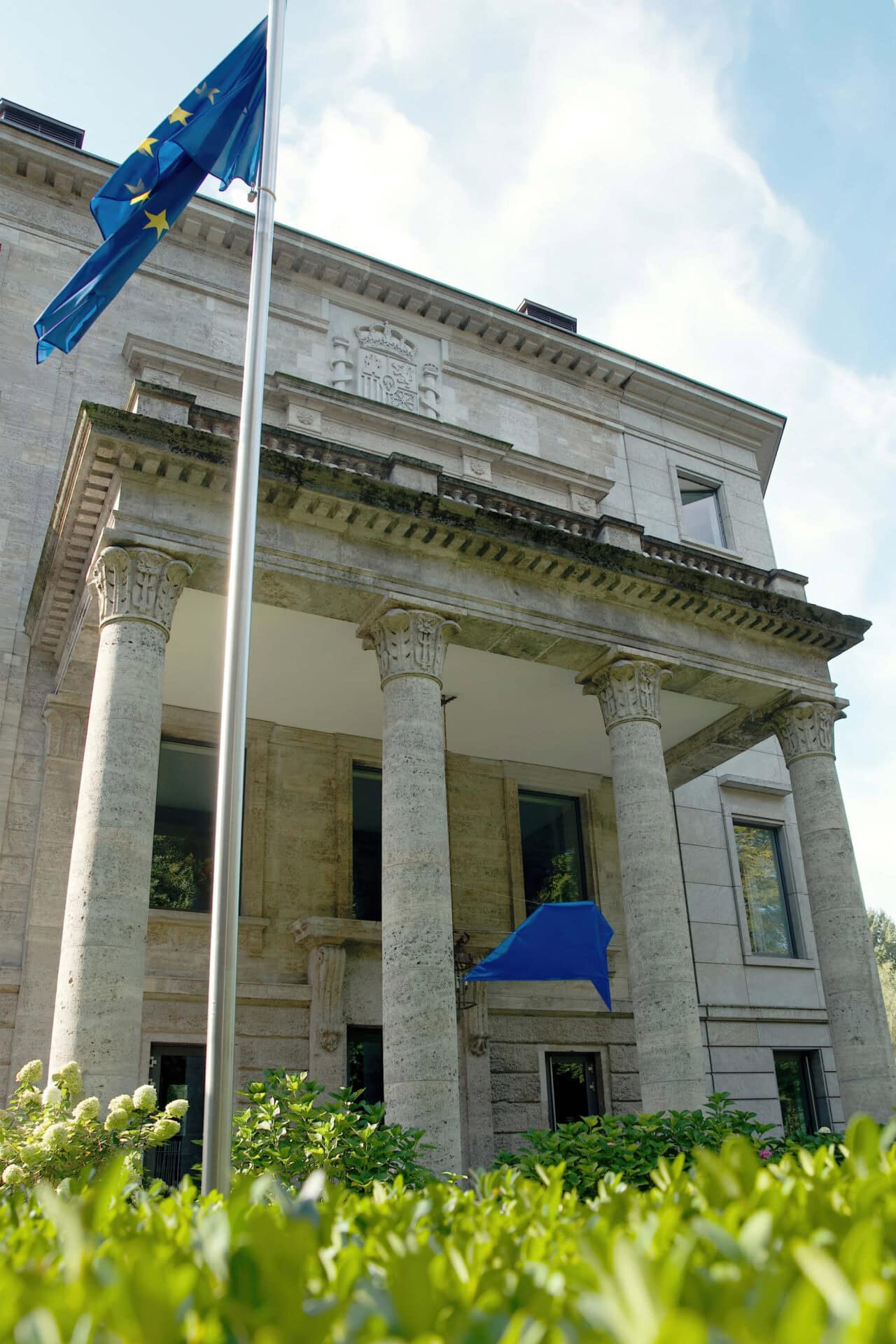


During the Roman Empire, a religious figure called “Fortuna populii romani” was created. She was a kind of guardian of the common good. Offerings were made to her in a temple in order to ensure the best for the community.
This idea has disappeared. Since the emergence of democratic states in the West, no one thinks about this anymore. The state is supposed to be the guardian of the common good.
But this is not always the truth.
Example:
In June 2012, to resolve the economic crisis, Spain received a bailout from the European Central Bank (ECB) in the form of credit. This caused a debt to the Spanish State, which the Spanish Government tried to reduce through drastic cuts to social services. And so the economic crisis led to a social one that strongly impacted a large part of the population and produced a powerful sense of indignation, dissatisfaction and the feeling of personal misfortune.
The term “bailout” means “rescue”.
The term “credit” comes from the Latin “Credere,” which means to believe.
Does the European Central Bank believe Spain will repay its credit? Who is being rescued?
Economics is an act of faith.
Perhaps the Roman people had a sense of the common good thanks to their Fortuna populii romani.
A new Fortuna populi as guardian of the common good could lead us to believe in the common good, and it would be no more absurd than being represented by and belonging to a lion, a horse, the stars, or a fire-breathing dragon.