Gleaning Unseen, 2025
Back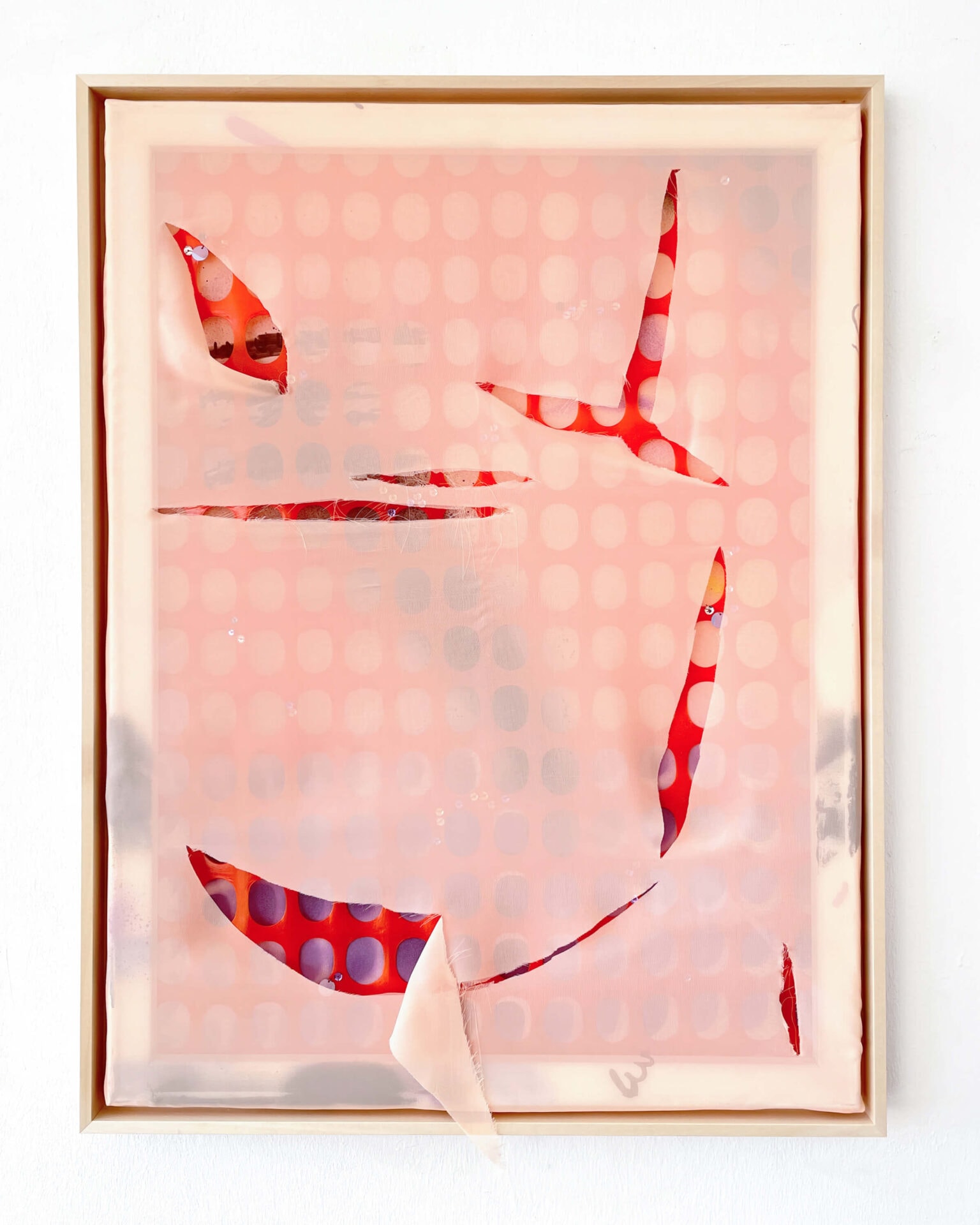
The ’90s are back.
I see teenagers wearing chains and ripped jeans.
I watch them walk back and forth, waiting for the subway to arrive.
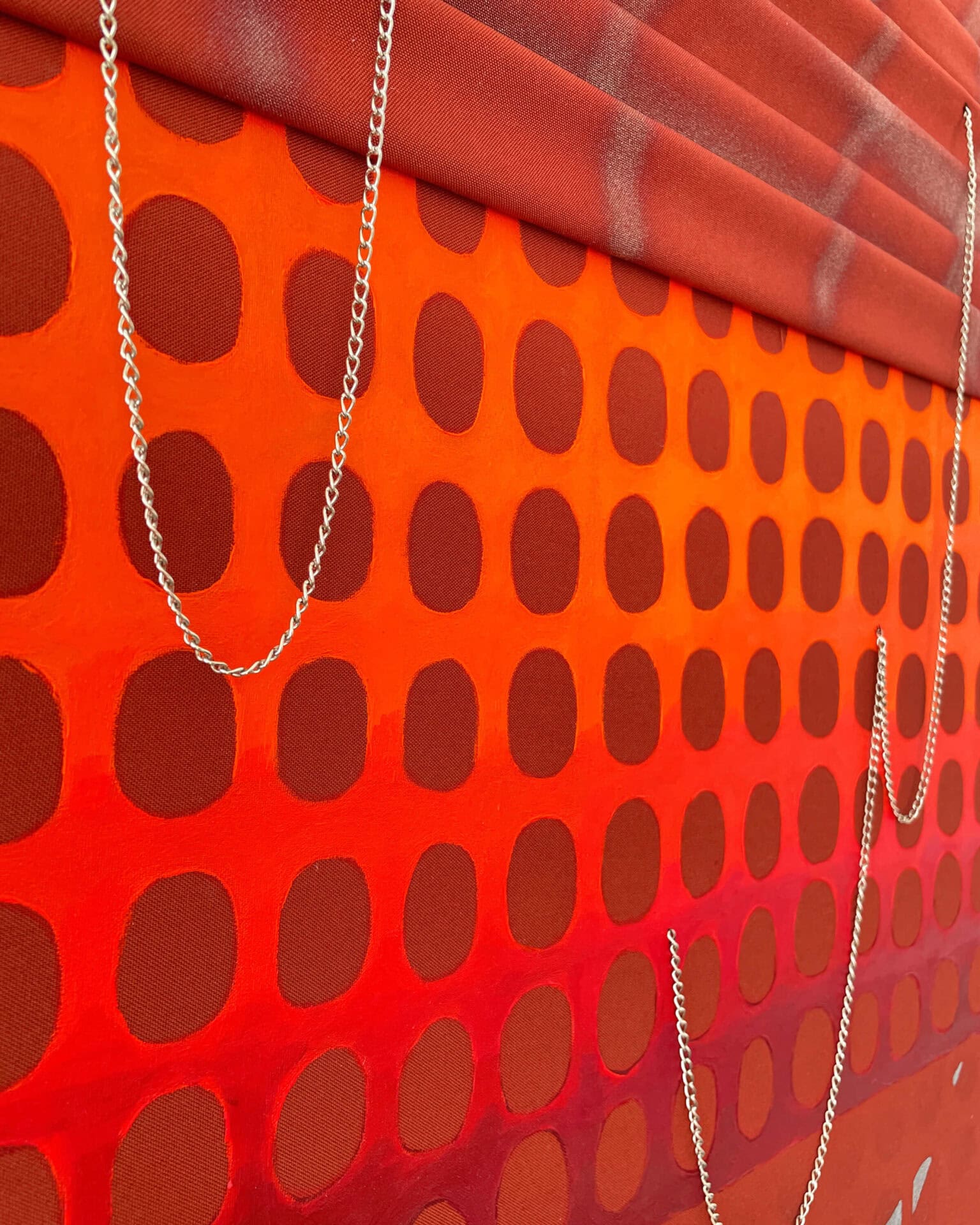
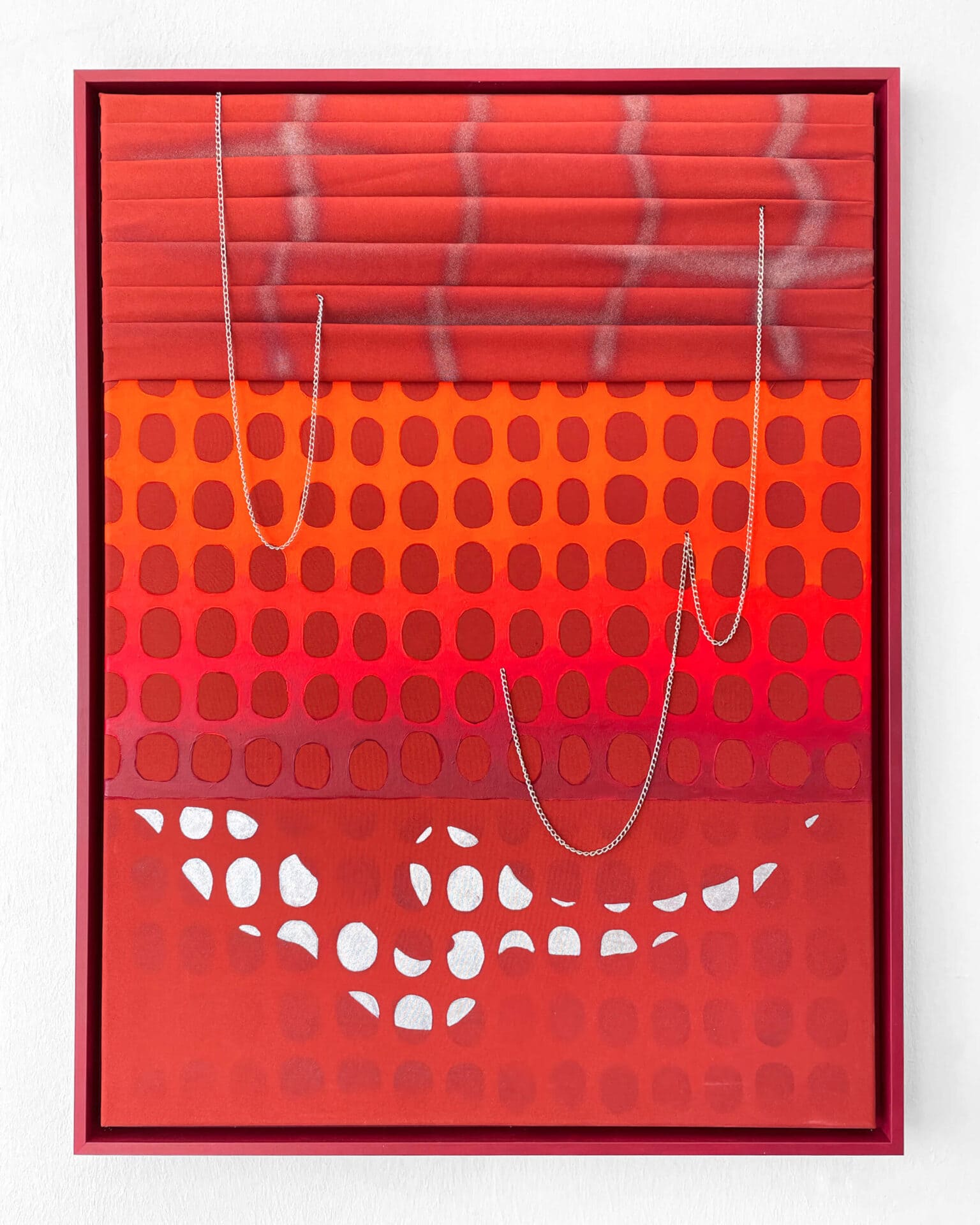
Hundreds of nails lacquered with fluorescent and iridescent polishes sparkle as they swipe through cell phone screens.
The chains move faster than the threads of torn clothing.
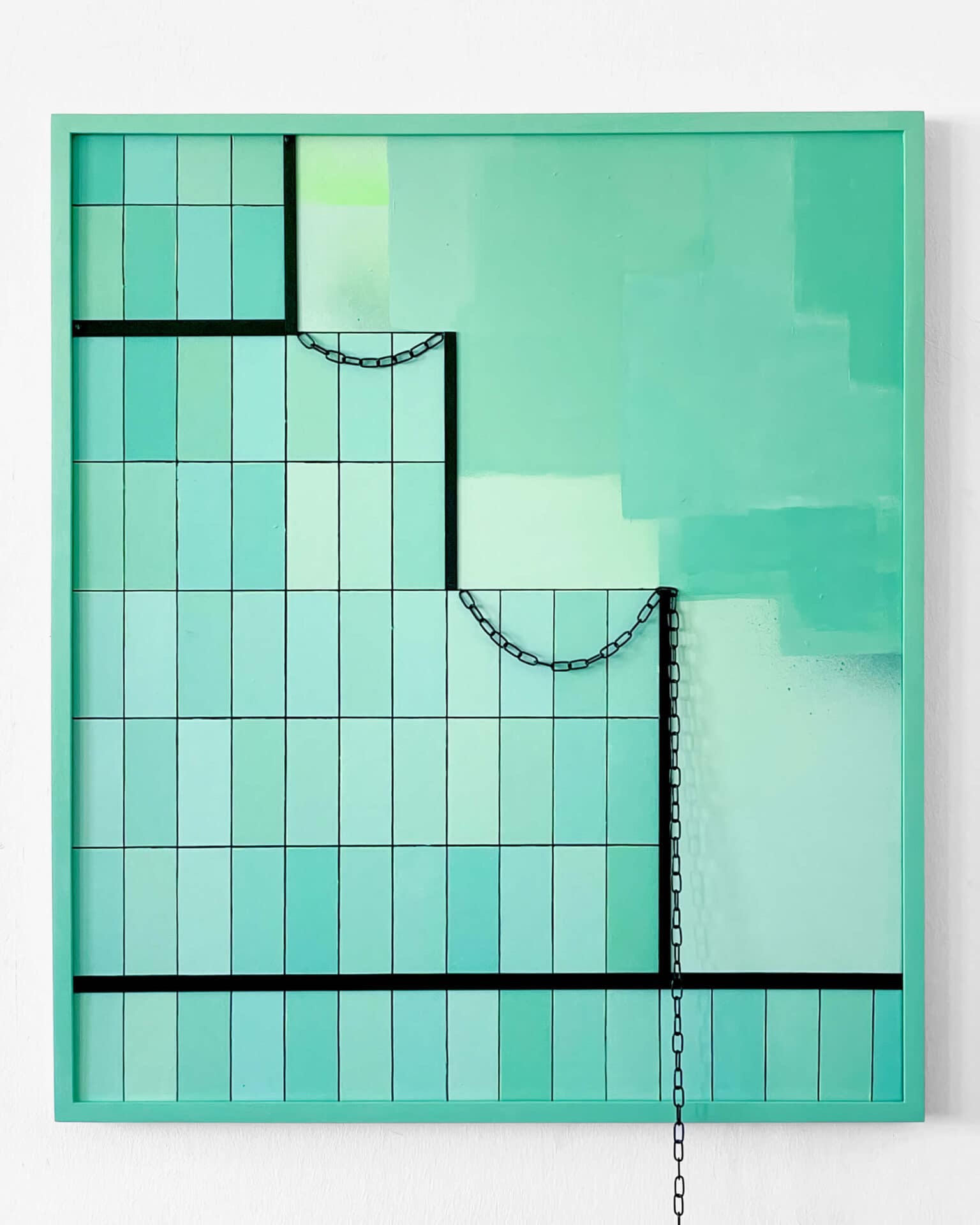
It’s spectacular to see simultaneous movements of different speeds against the grid backdrop of the subway station’s walls.
In this city, the facades of buildings go unrenovated for decades.
A coat of paint is very expensive.
Sometimes a small piece of wall is painted after being graffitied in a very bad way.
You can see the renovated pieces of wall because they aren’t the same color as the rest of it.
Please, call an artist.
We could get the same shade almost with our eyes closed.
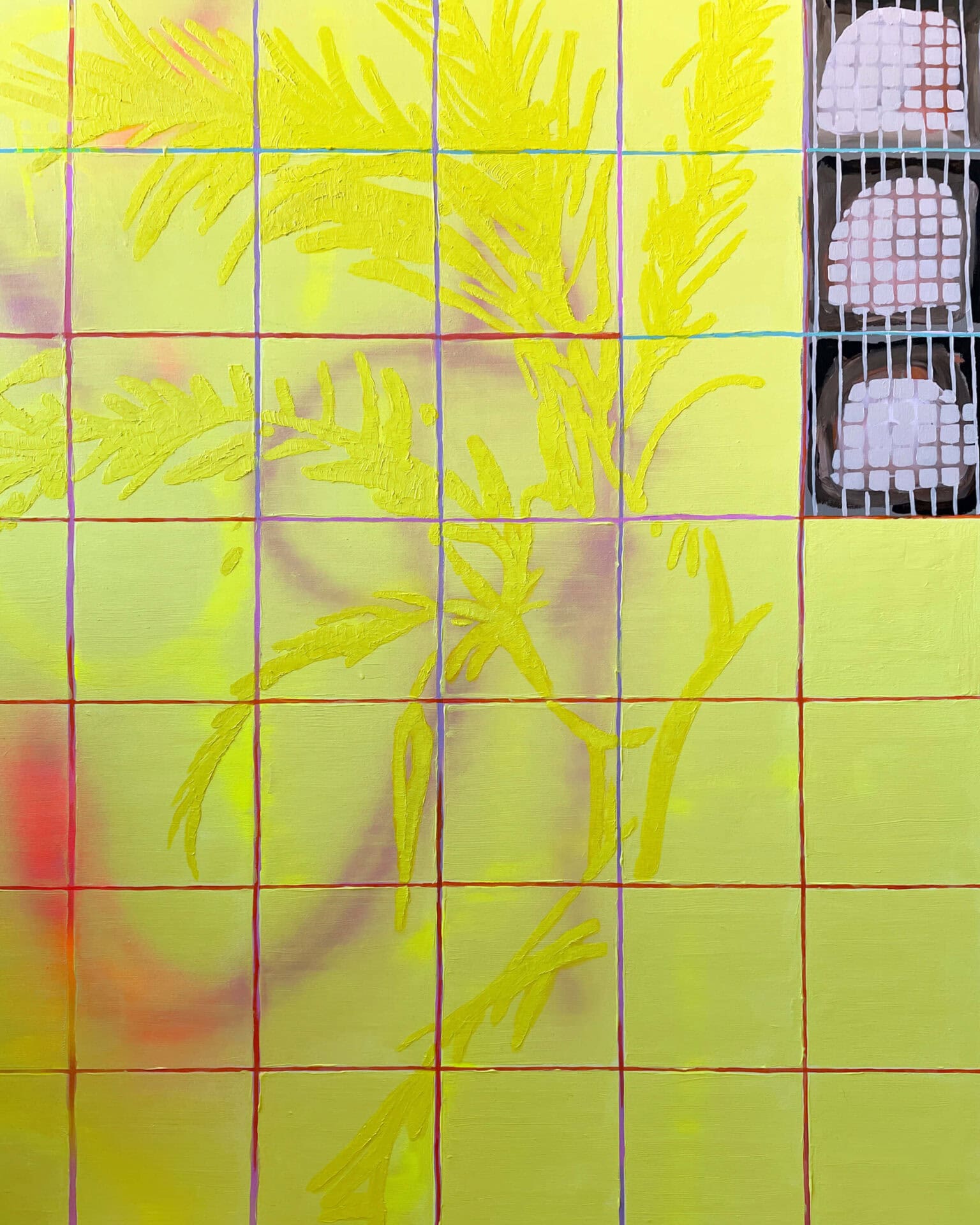
We could paint the shadow of a palm tree, if you wanted.
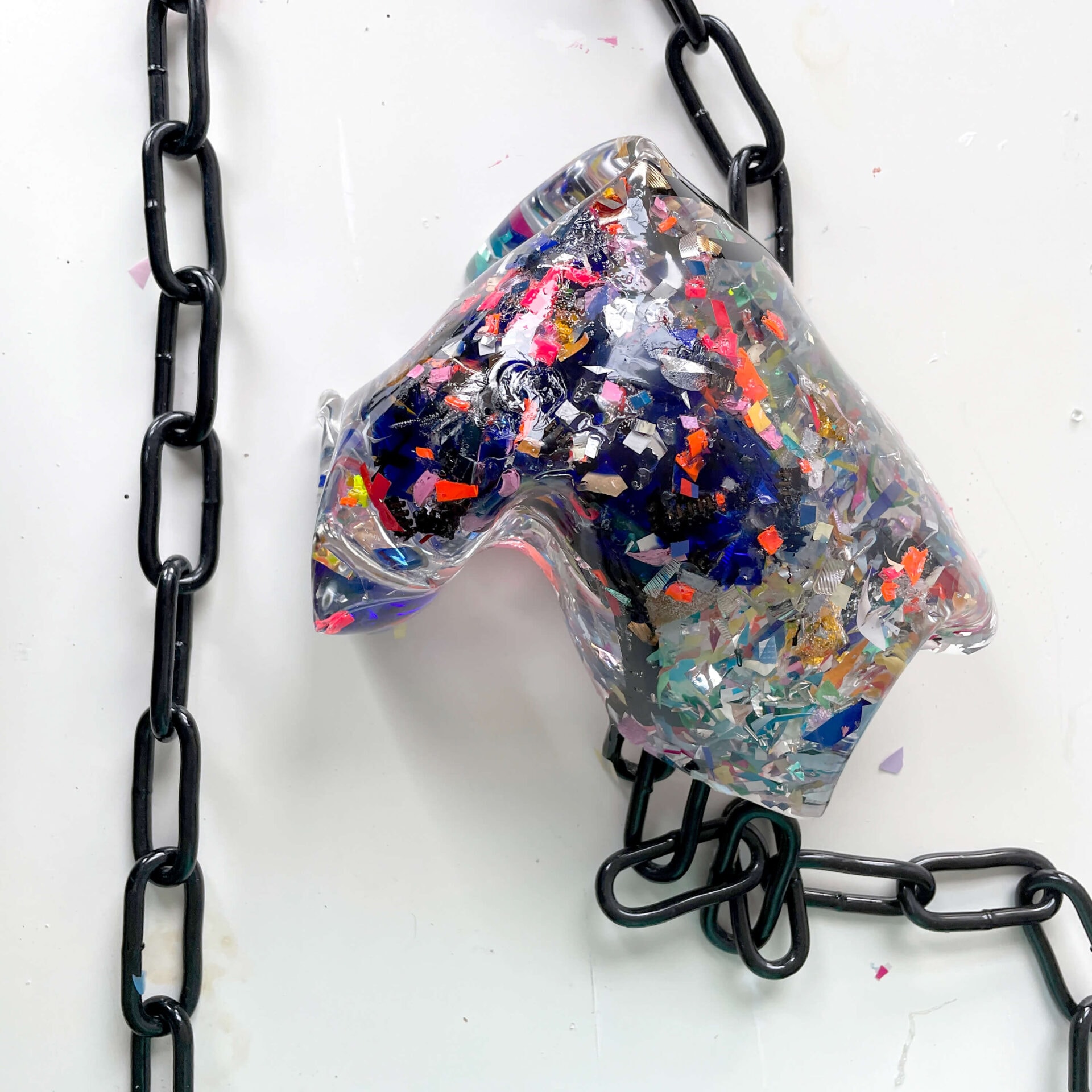
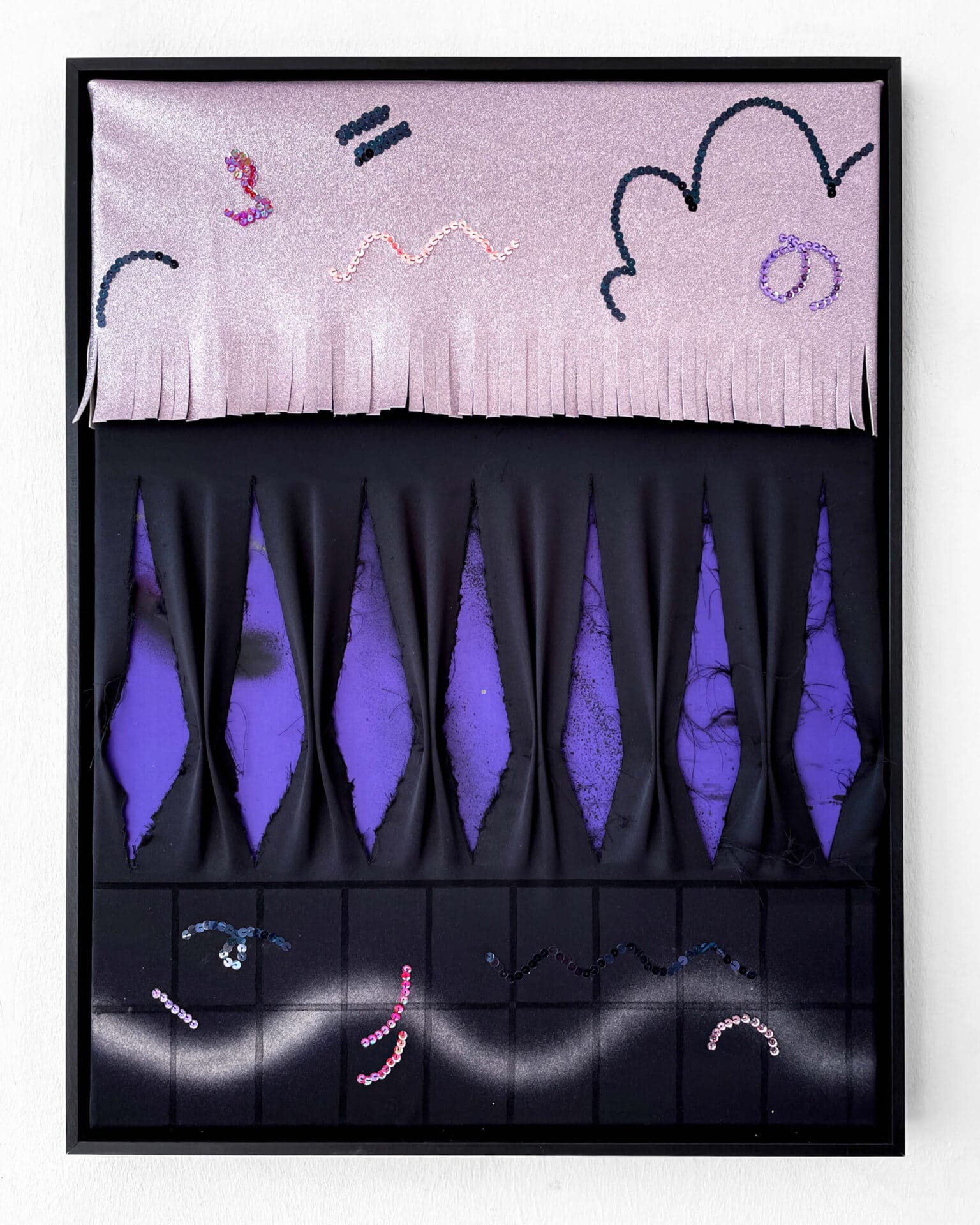
I collect what no one wants.
I focus on the devastated, the broken, the empty space left behind by what is no longer there because it has been stolen.
I collect memories of a street, of a facade, of the chance encounter between a piece of aluminum foil and a blind.
My memory is full of fragments of this kind.
They are random memories that form a decadent yet solemn aesthetic.
We don’t choose what we remember.
This predilection of mine for collecting what no one wants is called “gleaning”, like when the harvest ended and some people went to the field to gather what was left.
In another time, perhaps Millet would have painted me gleaning.
I am a glaneuse, and I do it shamelessly, in broad daylight and unseen.
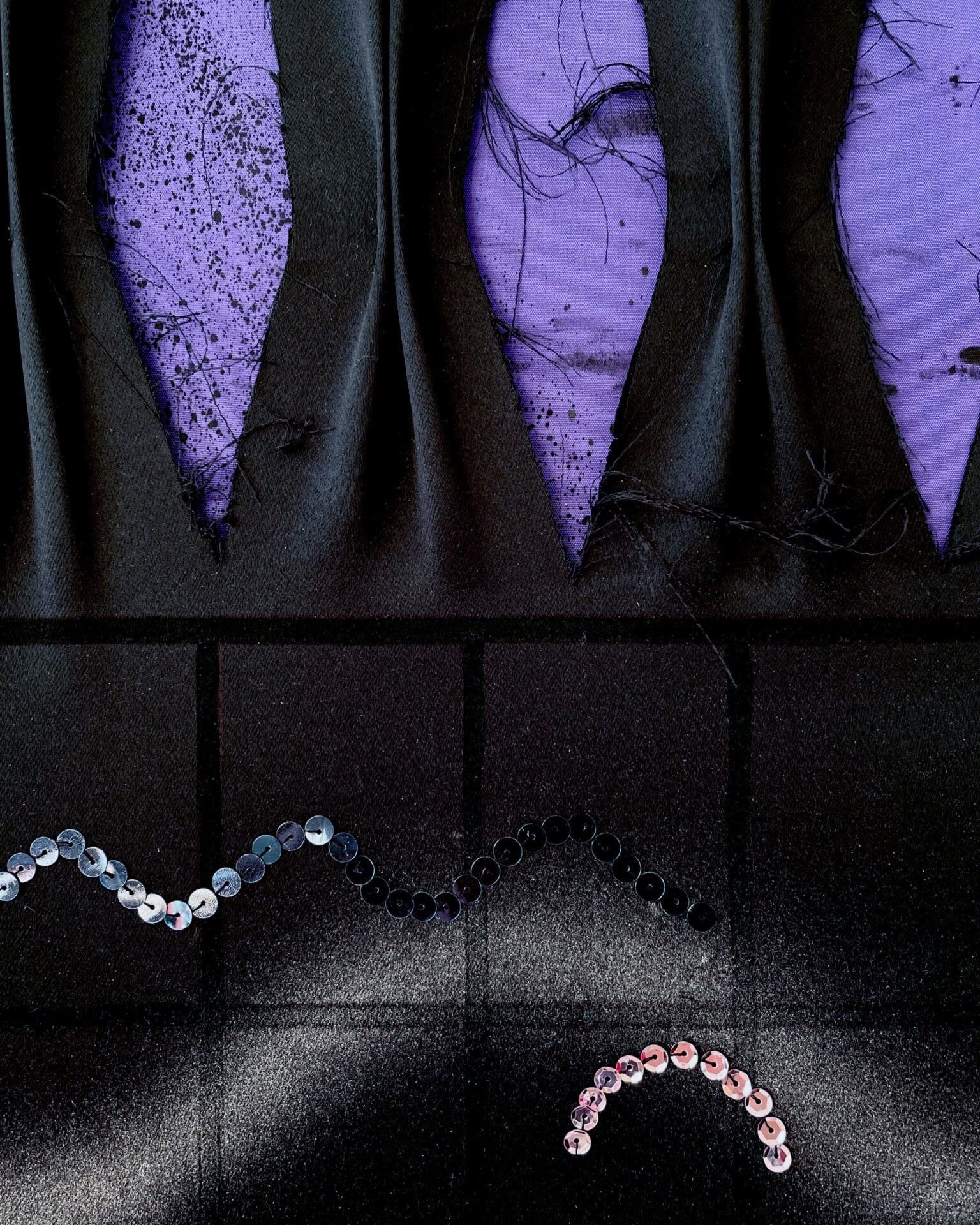
The term “gleaning” best defines Patricia Sandonis’s artistic practice. It refers to collecting what no one wants and originates in the countryside – in the act of harvesting what remains after the harvest.
In her latest works, Patricia Sandonis takes a broader look at this term in order to portray urban moments and scenes that go unnoticed but together form a contemporary aesthetic that Sandonis considers essential to the collective imagination.
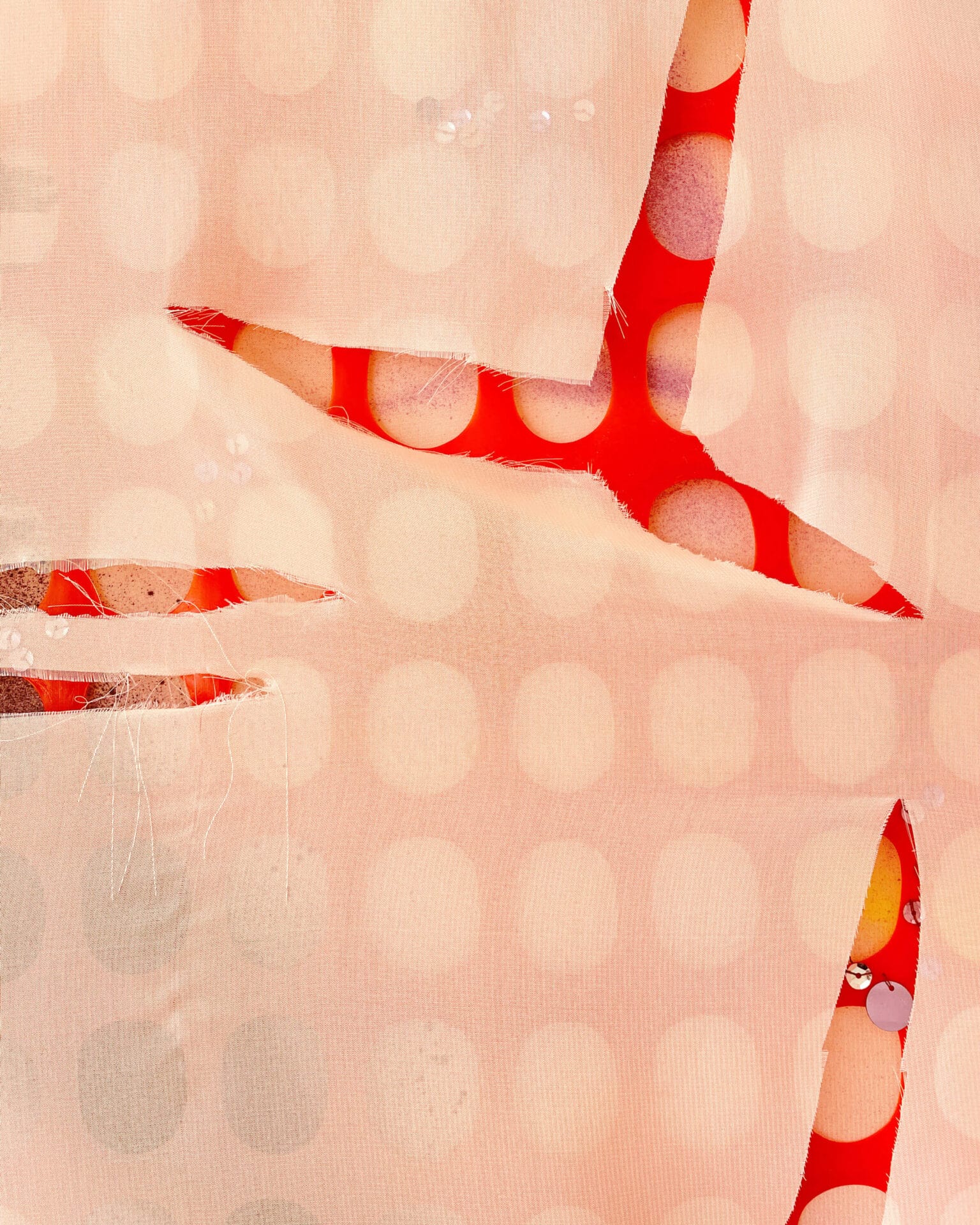
The gap left by stolen tiles from a subway station, the semi-renovated facades that fail to match the original wall color, construction elements, broken glass, sequins, the irregularity of the almost square tiles that form mosaics in the doorway of a house…
Like memory, Patricia Sandonis’s work begins with fragments and conglomerates to give rise to new encounters, new forms, in which we are never allowed to see the whole.
In the words of Cleo Wächter and Lusin Reinsch, the practice of gleaning
“(…) makes it possible to collect what has already passed through established structures. It is a practice that is hopeful, takes on a considerate attitude, and, in the Central European tradition, was carried out in groups.
Because collecting is above all a way of perceiving. It means keeping the senses open. Seeking out that which is ignored, that which is deemed unimportant at first glance. It allows for a balance between seeing and evaluating, and in doing so, we practice being mindful.”
Today, the meaning and attitude of this practice could be expanded, as Agnés Varda portrayed in her documentary film “The Gleaners and I” / “Les Glaneurs et la glaneuse.”
One picks up a bottle, an object, a memory, and thinks: How can this be used?
In times of tangible scarcity, economic inflation, political uncertainty, and a profound climate crisis, perhaps we can reach for this practice to connect with our social and ecological surroundings.”
The exhibition “Gleaning Without Being Seen” brings together Patricia Sandonis’s latest paintings, shown for the first time at the Javier Silva Gallery. This exhibition presents different artistic approaches to the concept of gleaning, touching on the relationship between gleaning and memory in urban spaces.
