Ignored in Public, 2024
Back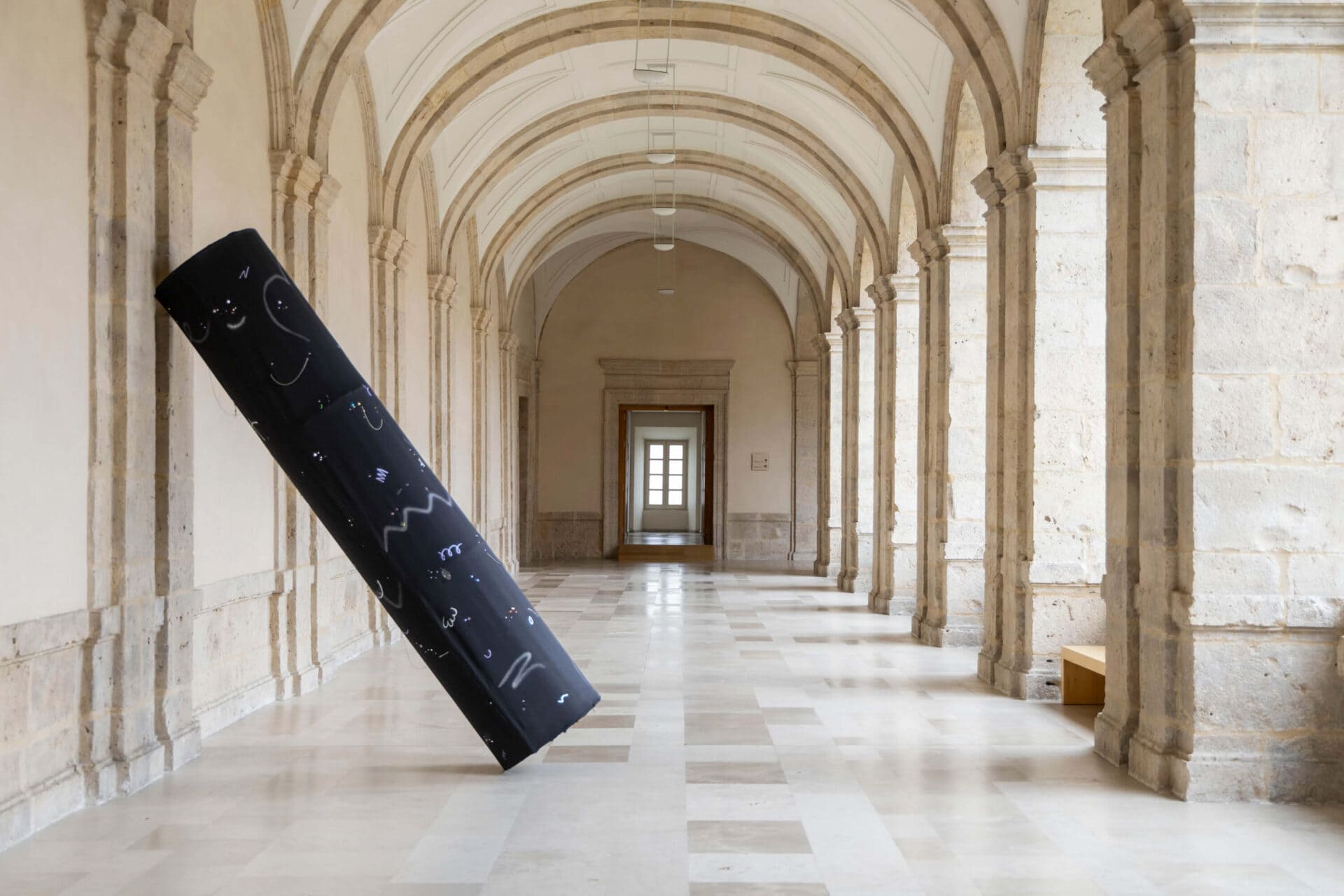
It is very difficult to take a good photo of a victory column with a mobile phone.
You have to stand very far back so that it looks straight and you capture its entirety.
You can hardly see the figure on top. It is too high for the eyes.
It is usually a golden figure representing a woman with wings and a crown of leaves. If it is sunny that day, the sun’s reflection on the gold of the figure blinds you, so it is best to wear sunglasses or a cap.
There are so many victory columns that almost no one knows which one represents what.
Sometimes a victory column represents multiple victories. A kind of two-for-one. This way you avoid having to build two next to each other and avoid the discussion about which one should be higher; which one should be made of granite and which one should be of marble.
A victory column is usually very tall, large, vertical, imposing, stable and solid. Because it is so high, everyone admires it and takes photos of it, regardless of what city it is in or what victories it refers to.
Travel photo albums are filled with columns of victories.
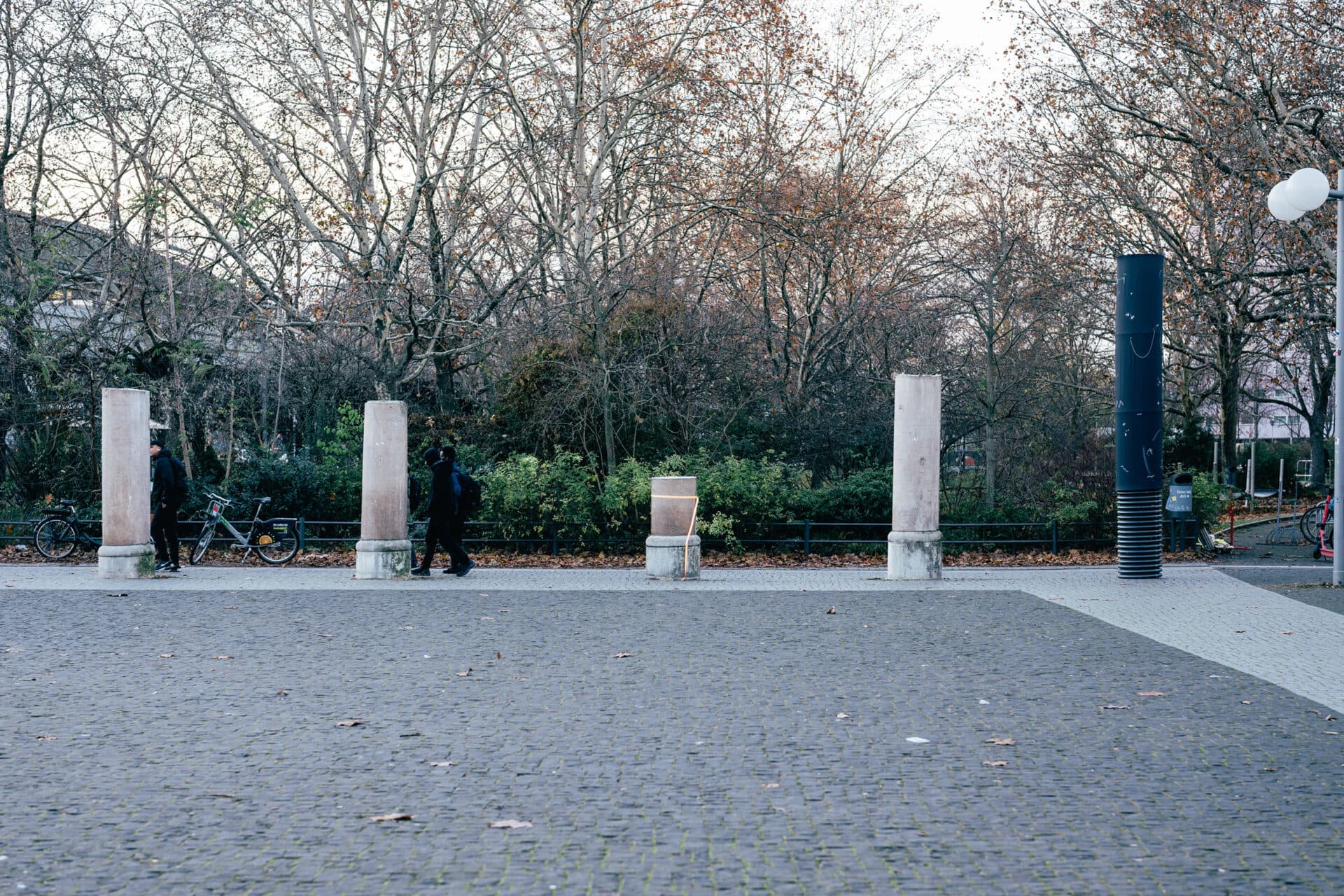
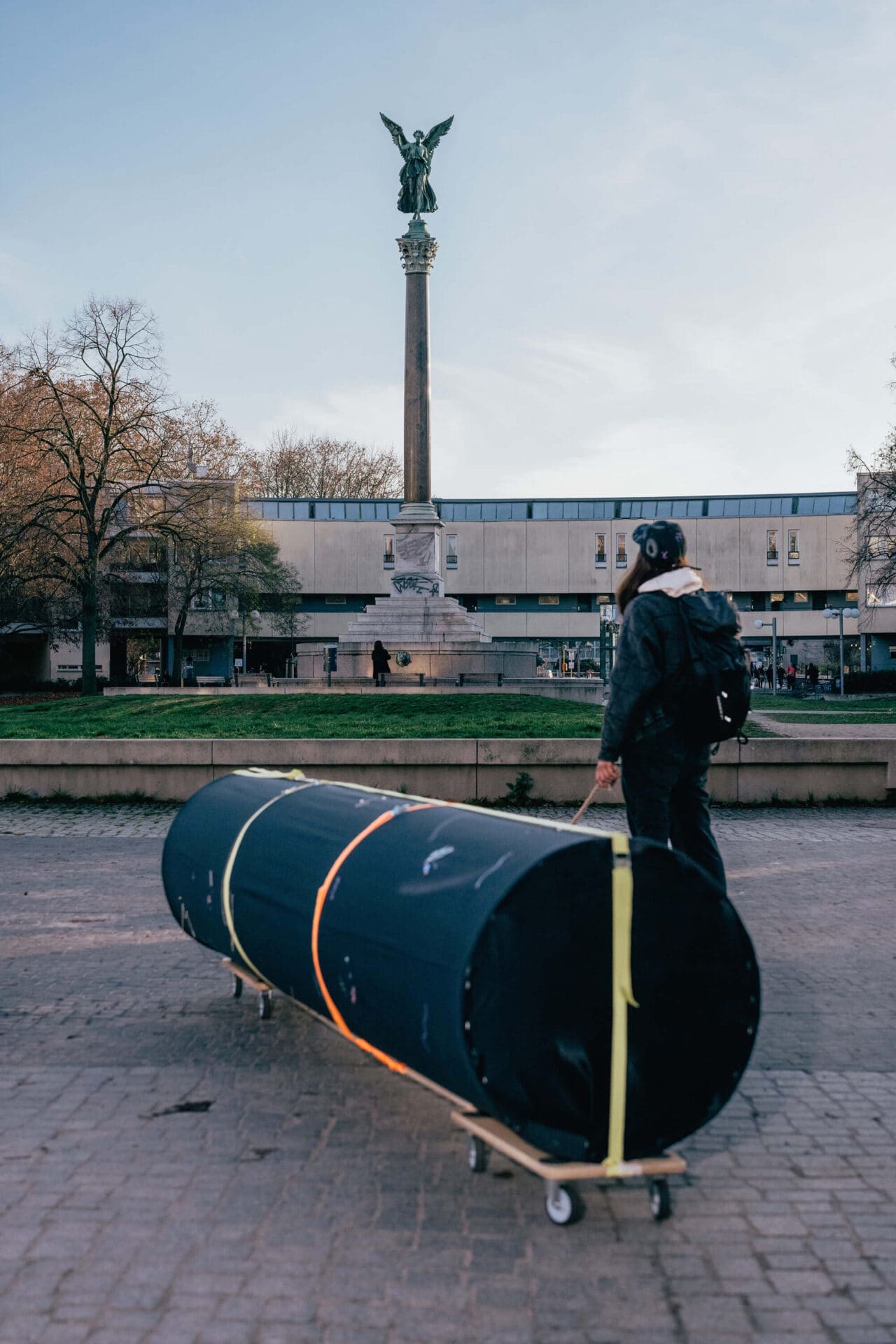
In the middle of Mehringplatz square in Berlin, there is one of these Victory Columns. It is a monument that represents a historical event.
In another part of the square, there are fragments of other columns that are also historical monuments, but they do not have a name. They became monuments when they were destroyed. Before that, they were not. They were granite columns that supported buildings, forming a portico.
These columns do not represent any event but are there to remember what the architecture was like before the war.
If you pass by, you cannot tell what it is because they have no explanatory plaque or name.
How can you remember something that cannot be named?
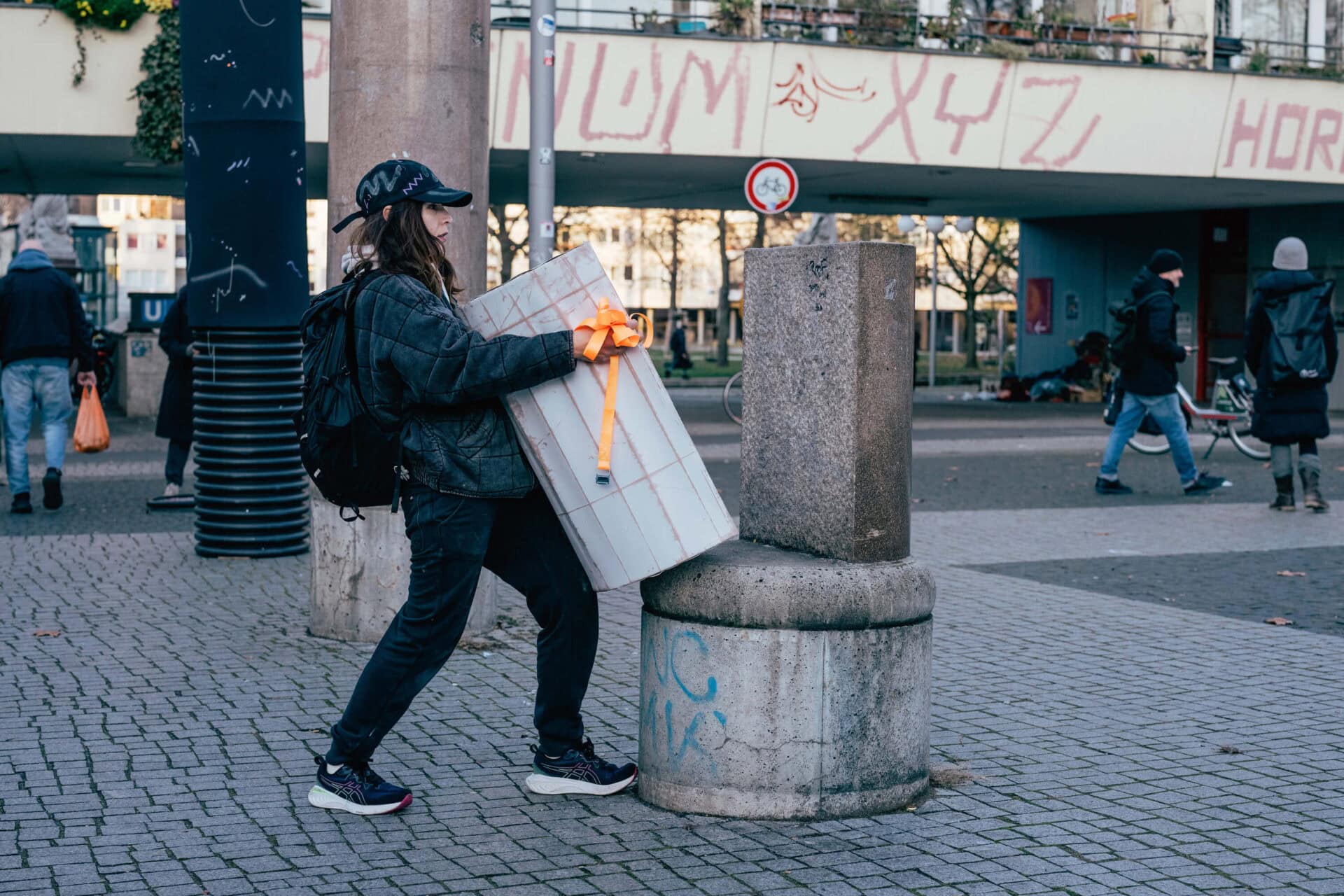
One of these columns has been cut in half. The other half is now a tombstone in the Bergmannstraße cemetery. It is a bit sad to see this half-column without its other half. I sometimes sit there to keep it company.
The other three columns are no more than two meters tall.
Nobody takes pictures of them.
They are not in the center of the square and they are not tall enough.
If they were taller, perhaps someone would photograph them, and their image would now be in travel photo albums.
If they were taller, perhaps someone would remember them, even without knowing their names.
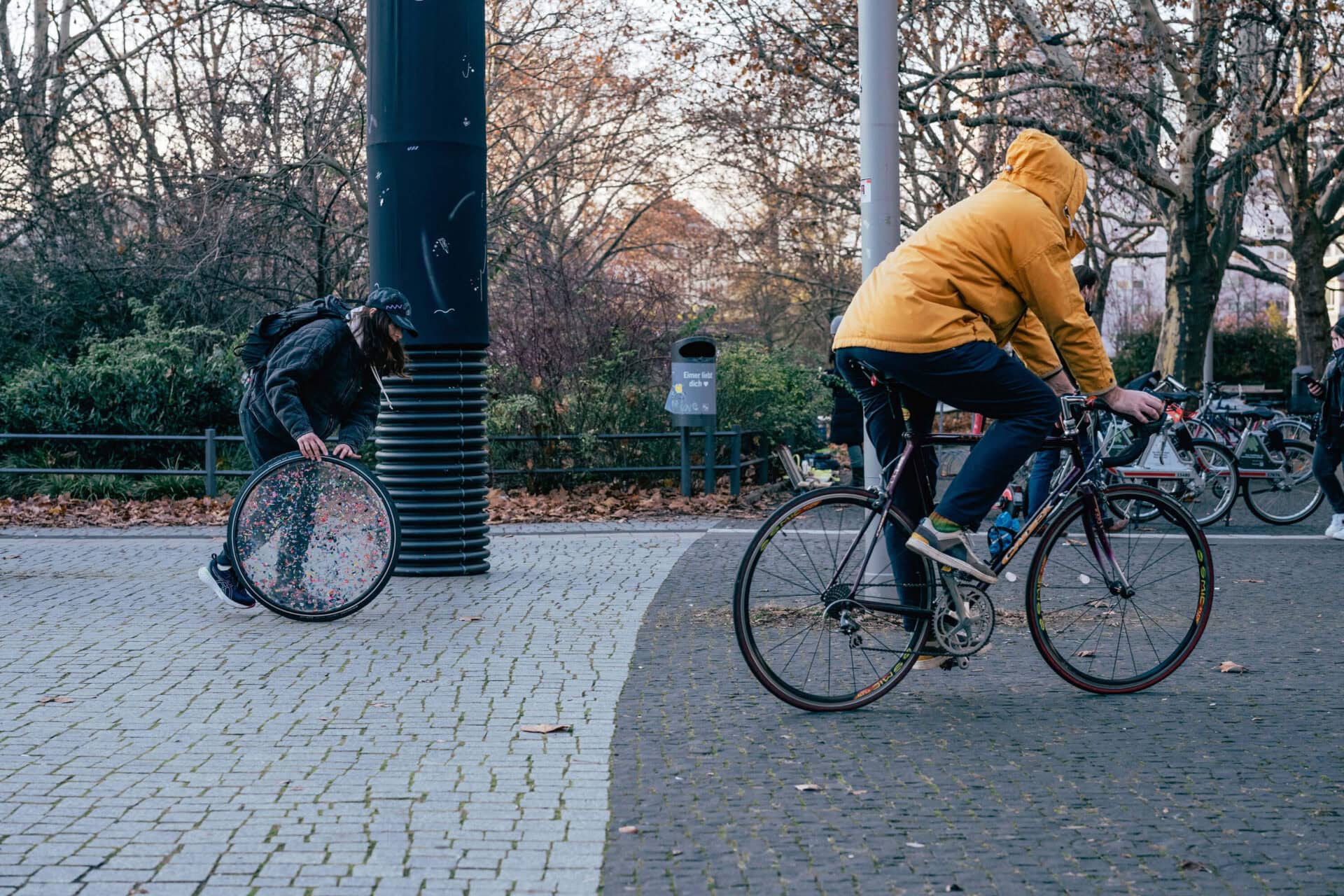
I once rode through this square on my bike. It was full of rubbish and broken glass, which I had to avoid.
There had been a party there.
There were remnants of confetti, a bottle of prosecco, and a crow rummaging through a kebab wrapper.
It was winter and there was a frozen puddle with a plastic cup stuck in it.
The ground was grey, but the rubbish gave it an impressionistic touch. The reflection of the broken glass made the ground look like it was covered in diamonds and glitter.
You could see the decay of this city in the fragments of a collective action.
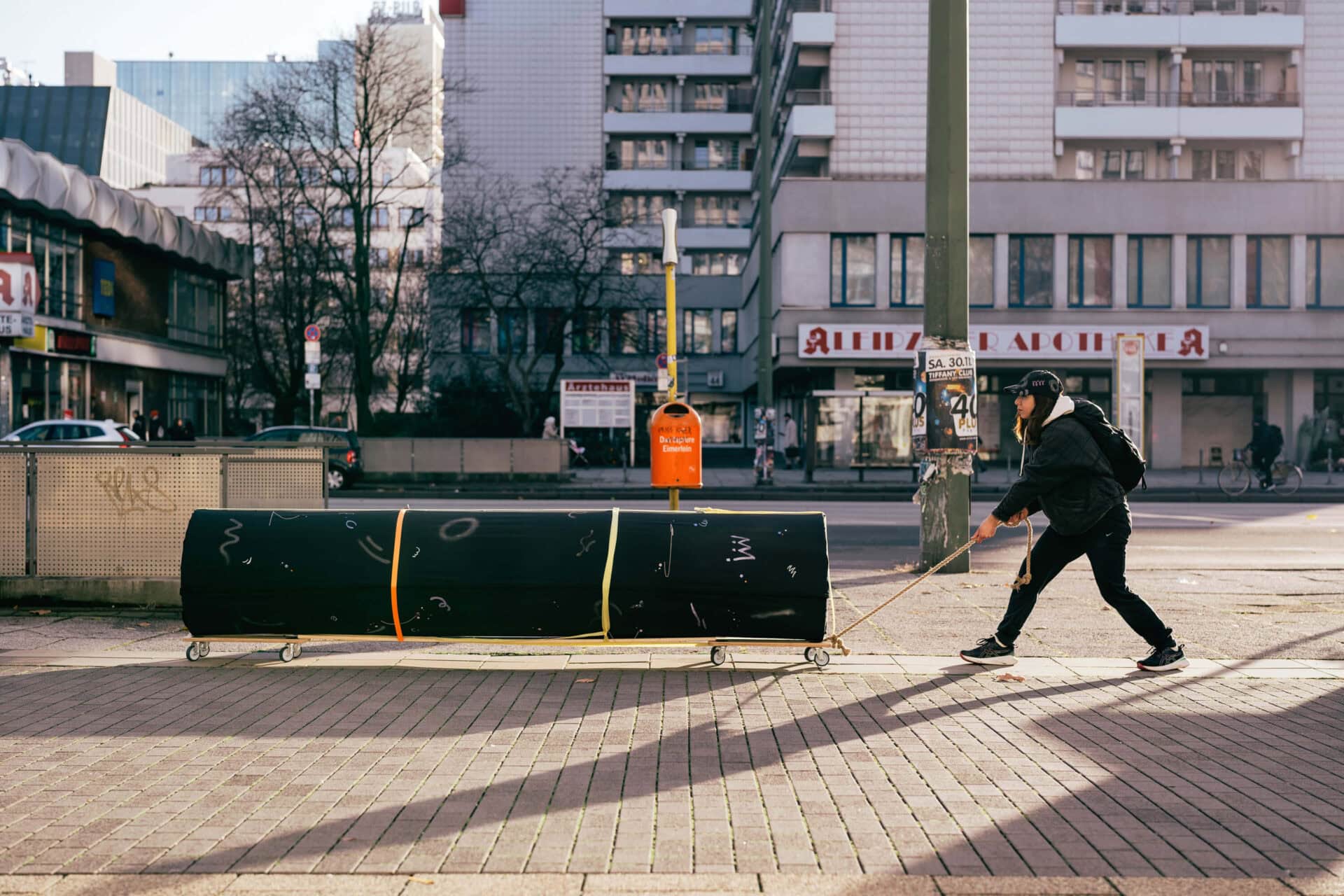
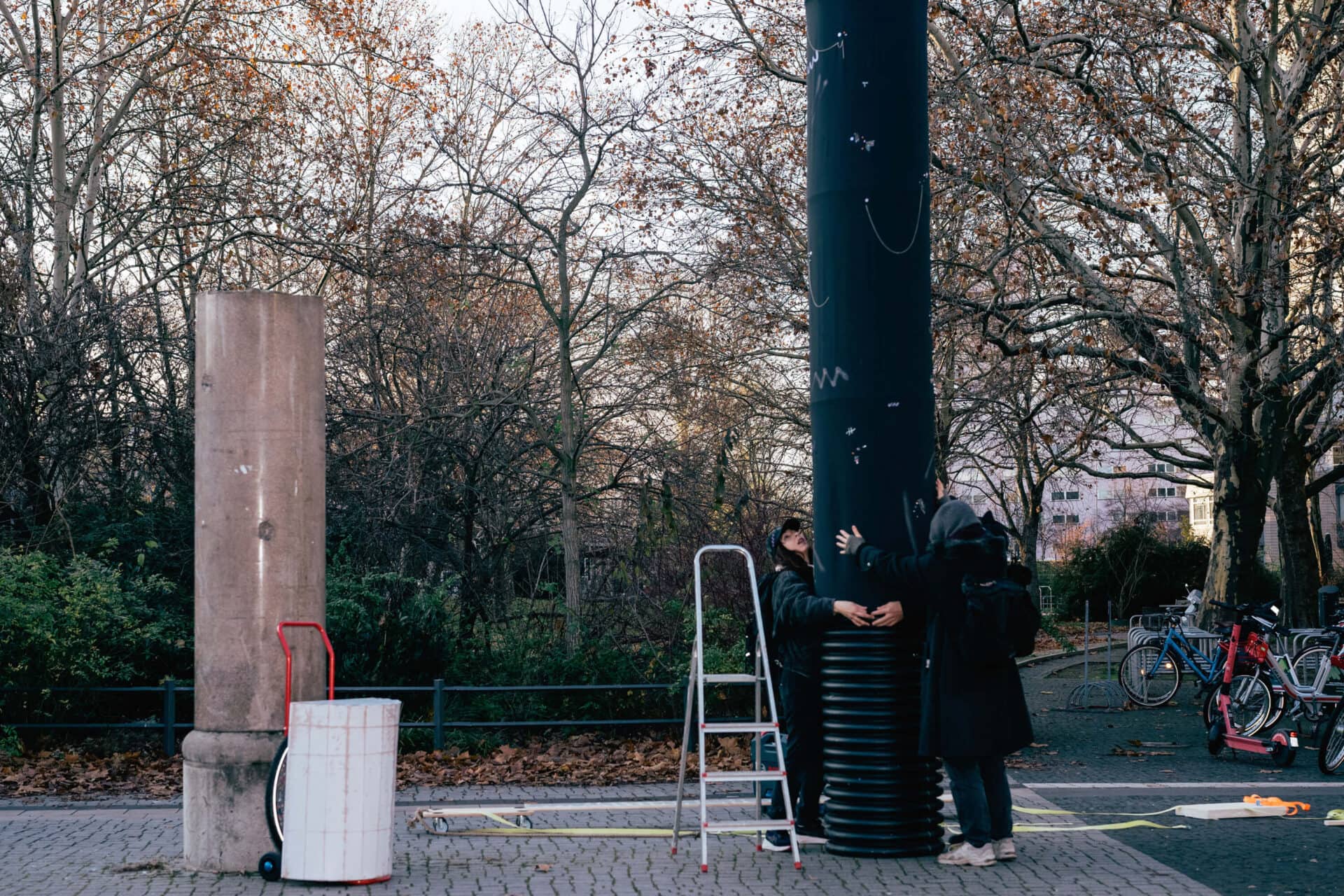
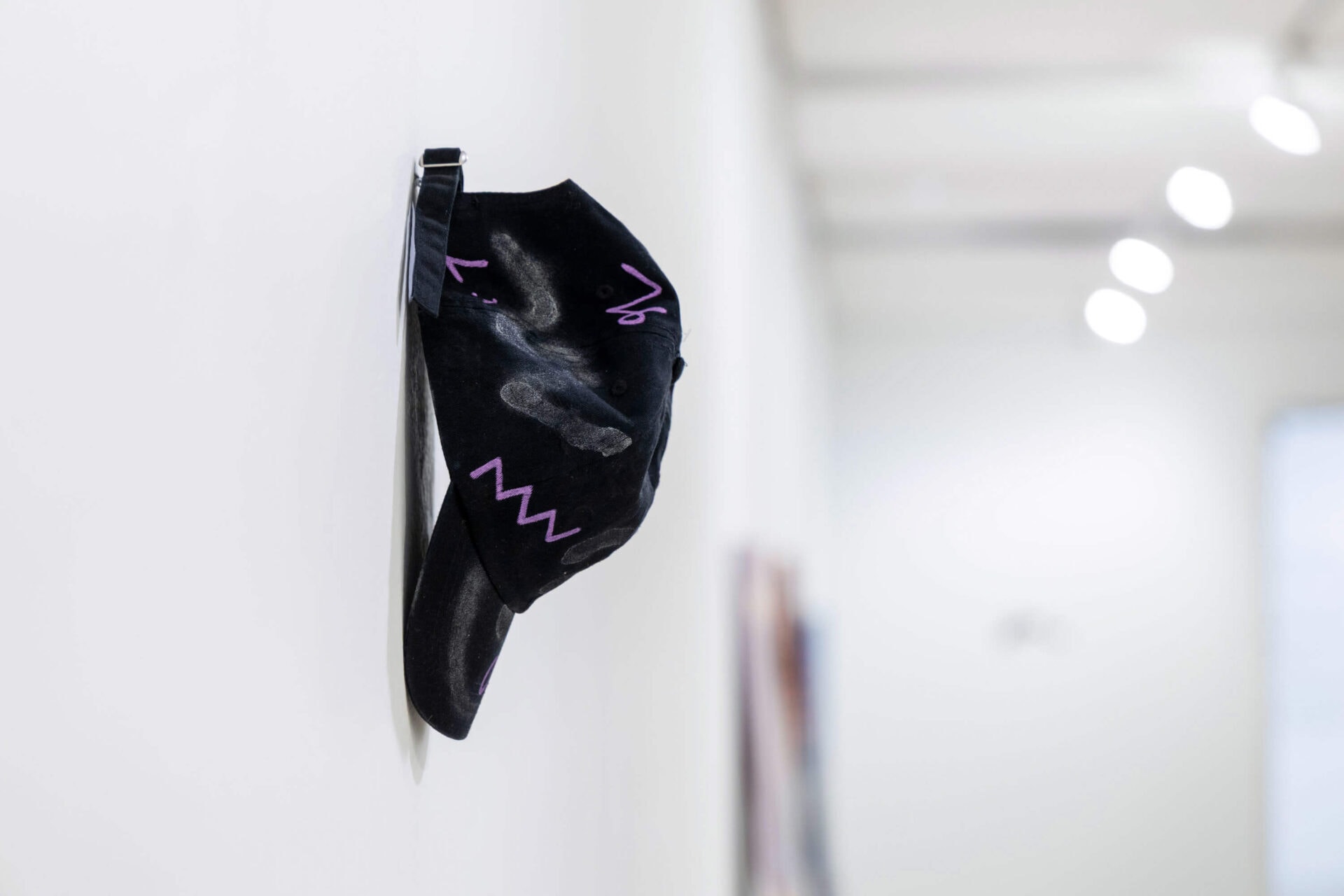
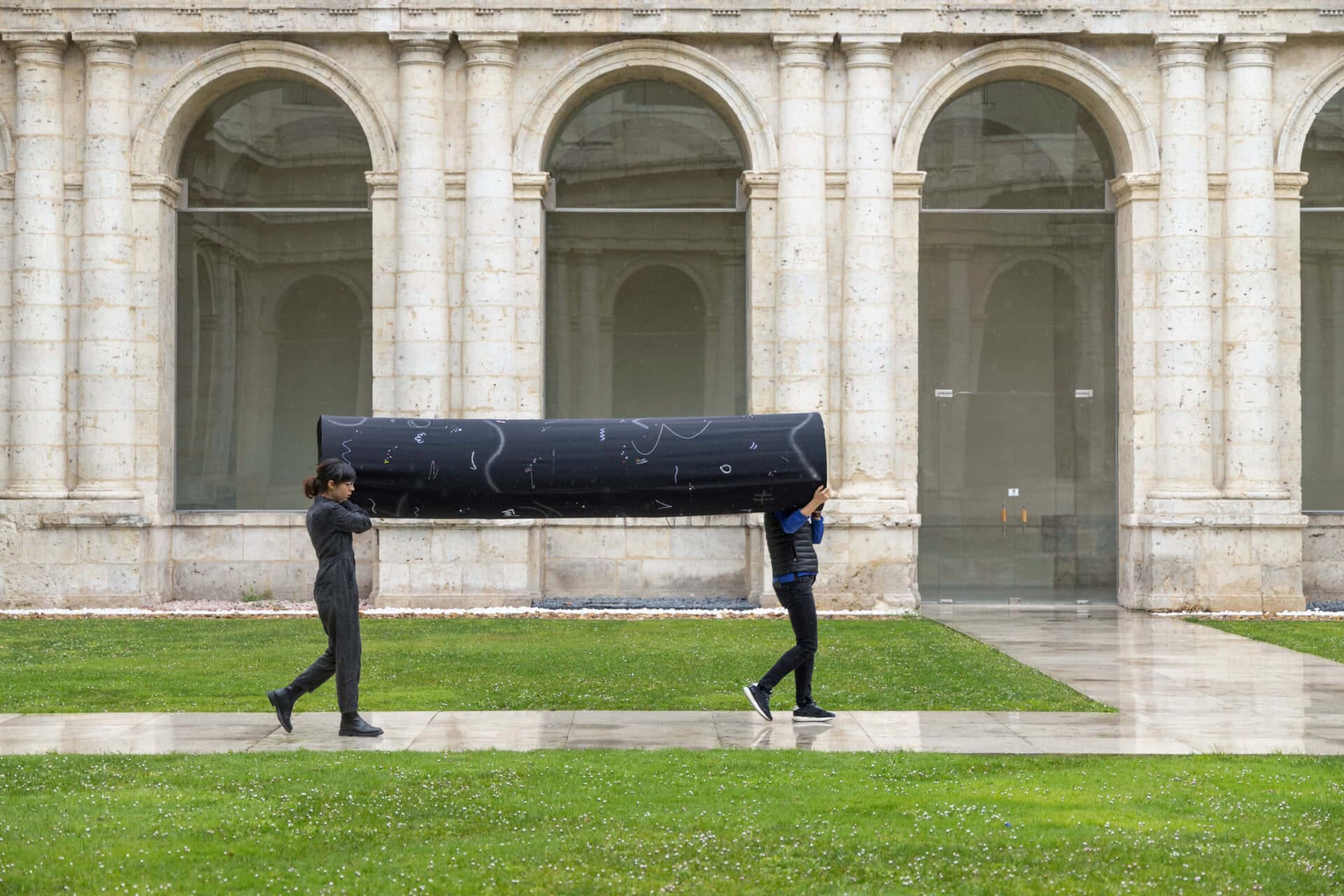
A cloudless sky stretches over the concrete cityscape, sunlight casting sharp contrasts on the urban fabric. Patricia Sandonis, wearing a cap decorated with shapes and ornaments, moves with intent, pushing and pulling a horizontal column through the busy streets. She is accompanied by a group of women. They are on their way to return the long, fabric-wrapped object to the place where it was first imagined.
Mehringplatz, Berlin-Kreuzberg. Winter 2024
The described performative, ceremonial act encapsulates the core of Sandonis’ artistic practice. Her work engages deeply with monuments – approaching them not as rigid structures, but as migratory entities that challenge traditional notions of permanence and power. She questions whom monuments serve, how they shape collective memory, and what democratic potential they hold. Through public intervention, inviting collaboration and interaction she blurs the boundaries between artist and audience, public and private space.
In her works, Patricia Sandonis approaches the city as a living archive, where decay and preservation become intertwined, revealing the poetic and political dimensions of urban space. She navigates the interplay between materiality, memory, and the socio-political structures that shape our collective experiences. Through a meticulous process of collecting, repurposing, and translating remnants of urban life, her works function as both reflections and disruptions.
With the exhibition Uncertainty in Consensus at the Museo Patio Herreriano in Valladolid she is returning to her hometown.
The museum’s collection is rooted in the “Colección Arte Contemporáneo” (CAC), one of Spain’s renowned private collections of contemporary art. Formed by the Asociación Arte Contemporáneo, it represents an independent effort to preserve and narrate Spain’s artistic evolution since 1918. The CAC offers a grassroots perspective on Spain’s cultural and political history. This approach reflects a dynamic relationship between tradition and change, permanence and transformation—themes that also echo in Sandonis’ work. The works in this exhibition are very much informed by Berlin, where she has been based the past two decades and now find refuge in the museum’s architecture- a former monastery.
Berlin is a never-ending construction site. To this day, its urban landscape is strongly marked by the bombing it endured during the Second World War and its East-West division during the four decades that followed. The only capital in Europe to devalue its country’s GDP, it has long presented itself as an artistic Eldorado, with low rents and undeveloped sites. Now it is subject to gentrification and real-estate speculation.
Patricia Sandonis, brings her everyday experiences into her art and raises questions of belonging and social participation. She asks, not only how, but also who gets to define the city and our understanding of it. By working with architectural and urban elements, Sandonis reflects on the interplay of writing and reading meaning into one’s surroundings, and imagines communal processes beyond democracy. In which minorities, can’t decide on the directions taken. Only through consensus, all can be included.
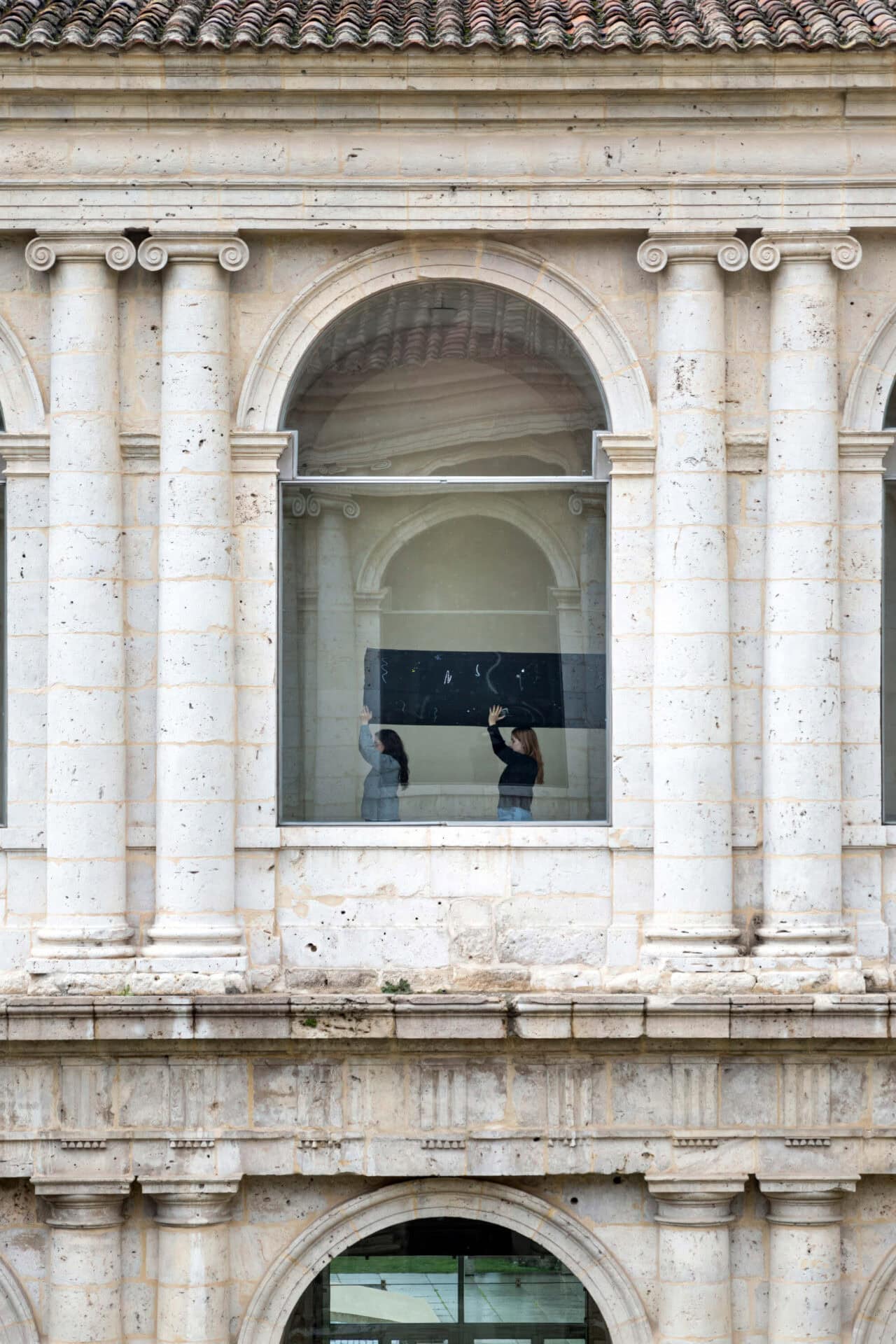
For Uncertainty in Consensus her works migrate to Valladolid – a journey that could be considered a return and a departure at once. Patricia Sandonis guides the artworks through the museum, letting them absorb sunlight in the courtyard to finally have them arrive in the exhibition space. How is movement reflected in things that stand still? What does it move within us?. The exhibition reminds us that migration is not a single act but a continuous negotiation of place, purpose, and presence. It challenges the static, offering new perspectives and reimagined relationships wherever it goes.
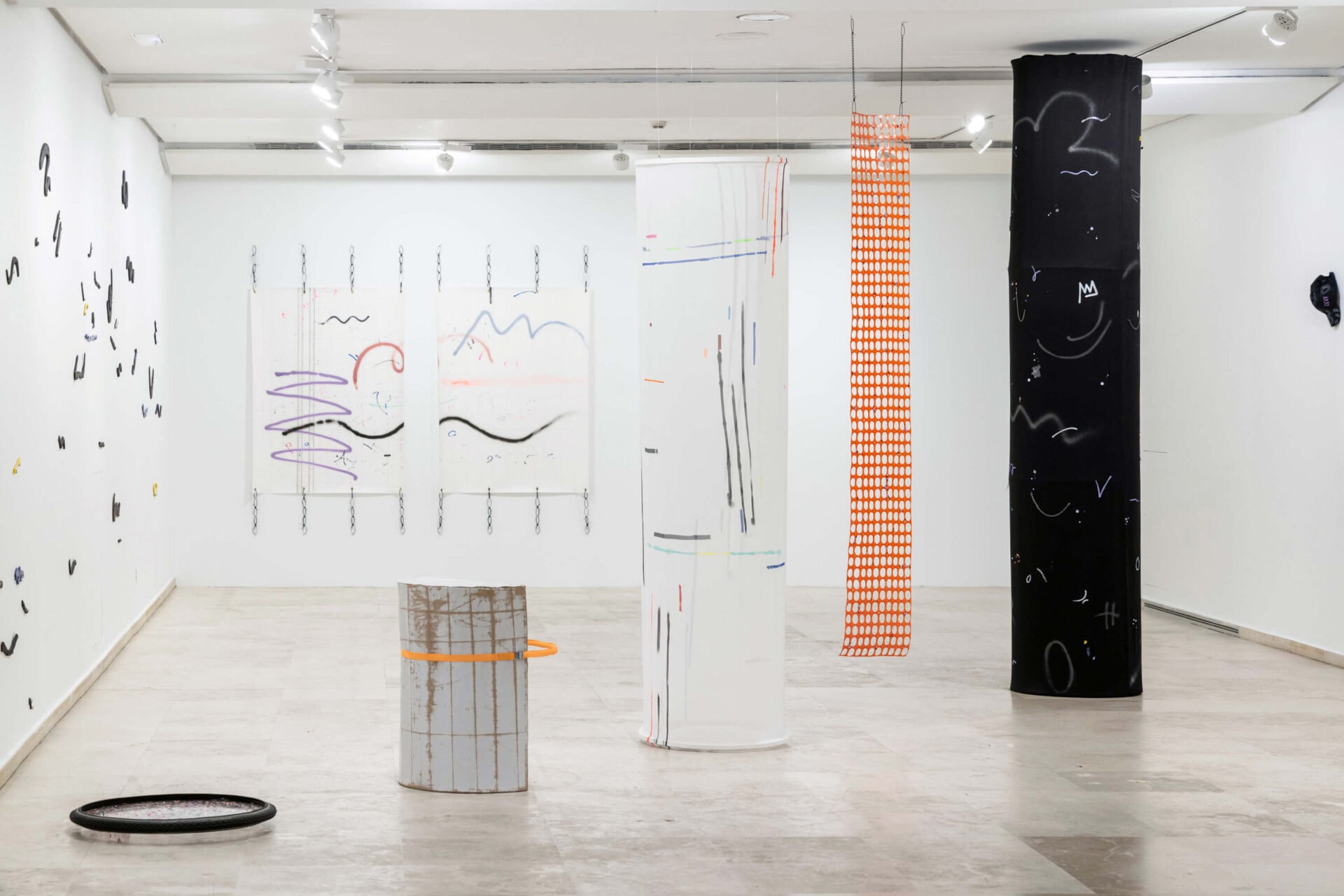
Patricia Sandonis explores the question of importance, through another architectural element in the work Ignored in Public. This installation both revolves around and references a row of four columns that can be found on a square outside of the U-Bahn-station Hallesches Tor. Where, during Prussian times, one of the city gates stood. Due to the growth of the city, it has now shifted from marking the periphery, to a central spot. And with that it has become a crossroad of many lines of transportation, an essential commuting-hub.
The original columns are remnants of a building which was destroyed by American bombers on February 3rd, 1945, during an air raid on the area. Their remains were resurrected and placed in their original location, intentionally to remember this moment of doom. Today, they shine in their incompleteness, differing in height, showing their scars in their granite surface.
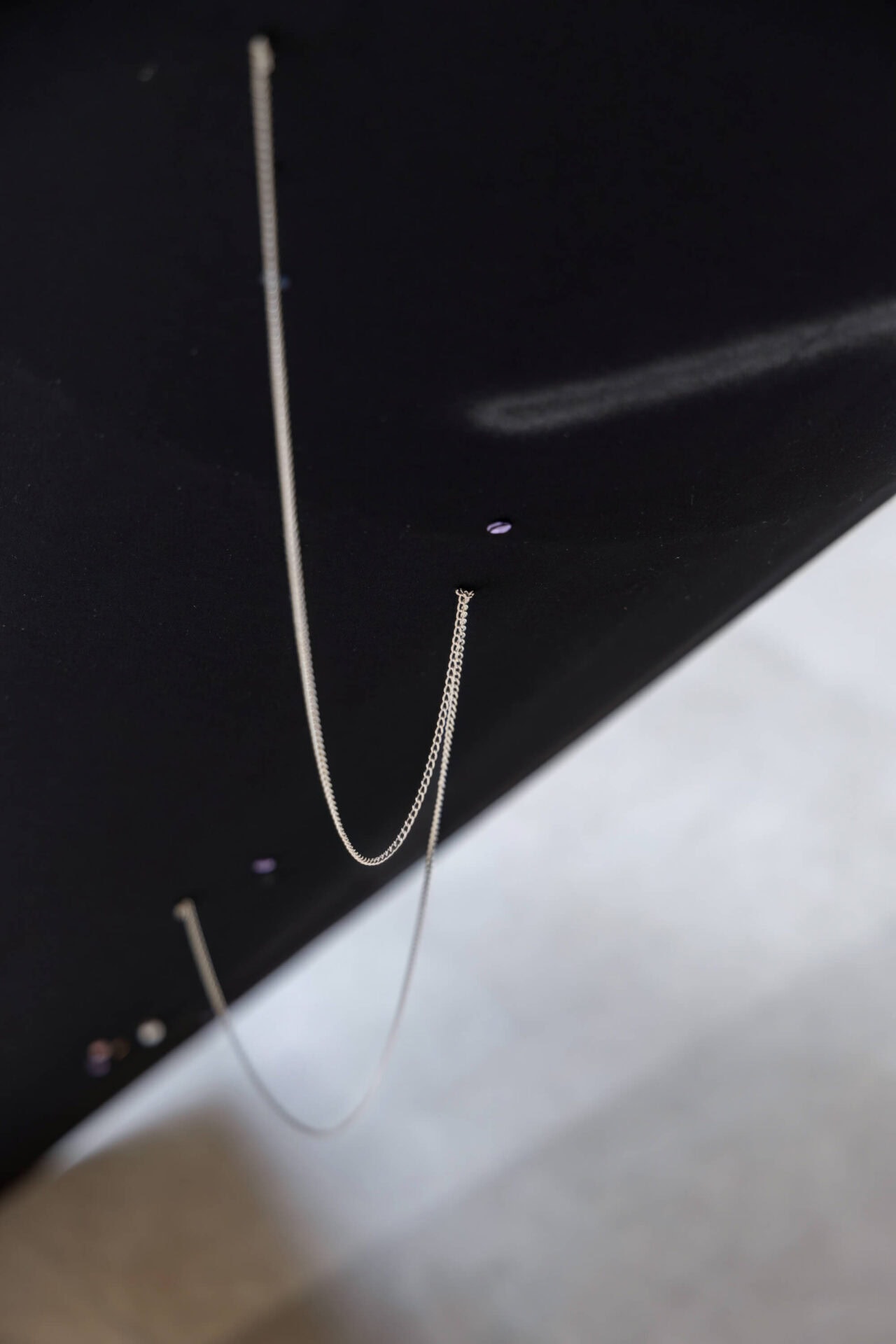
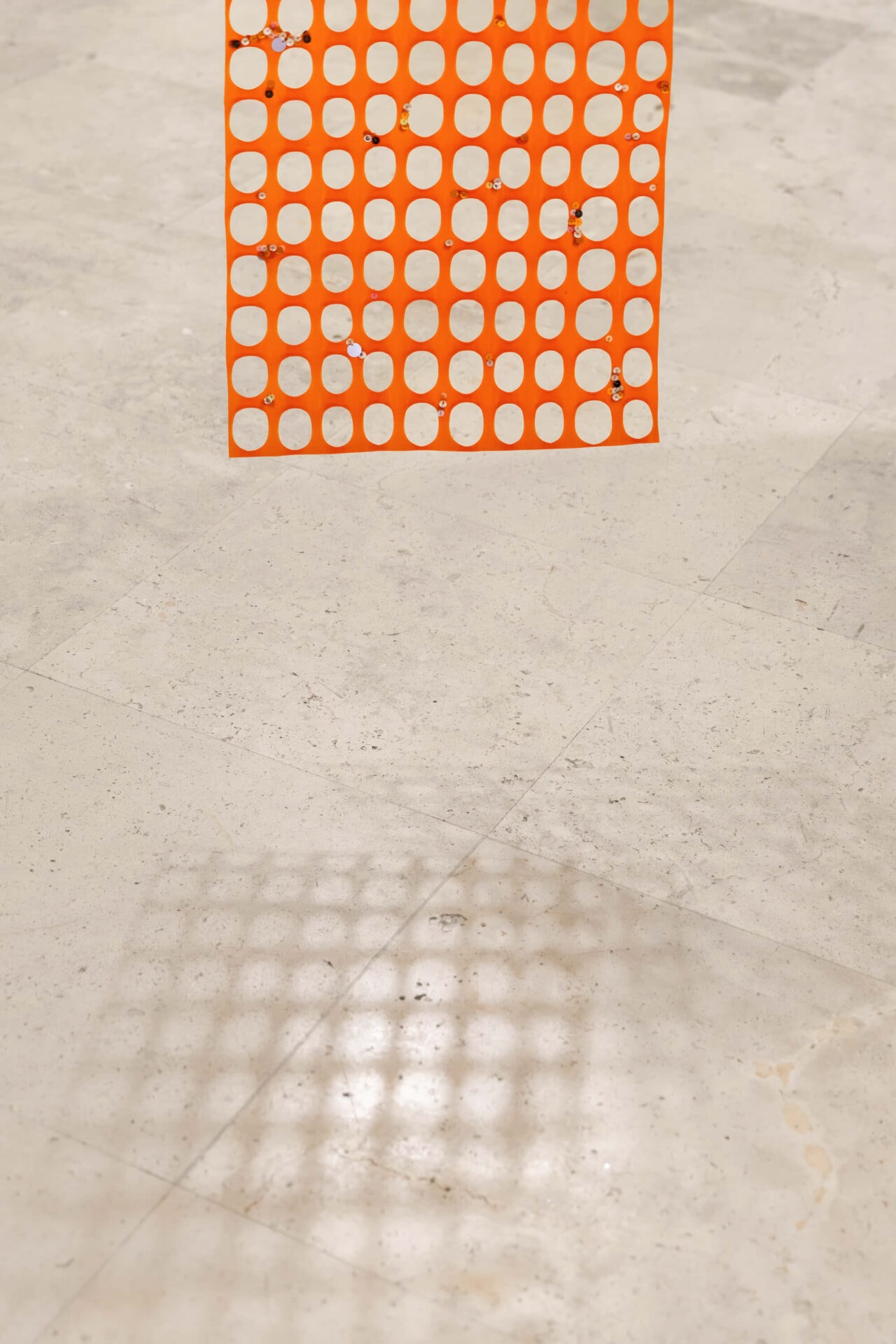
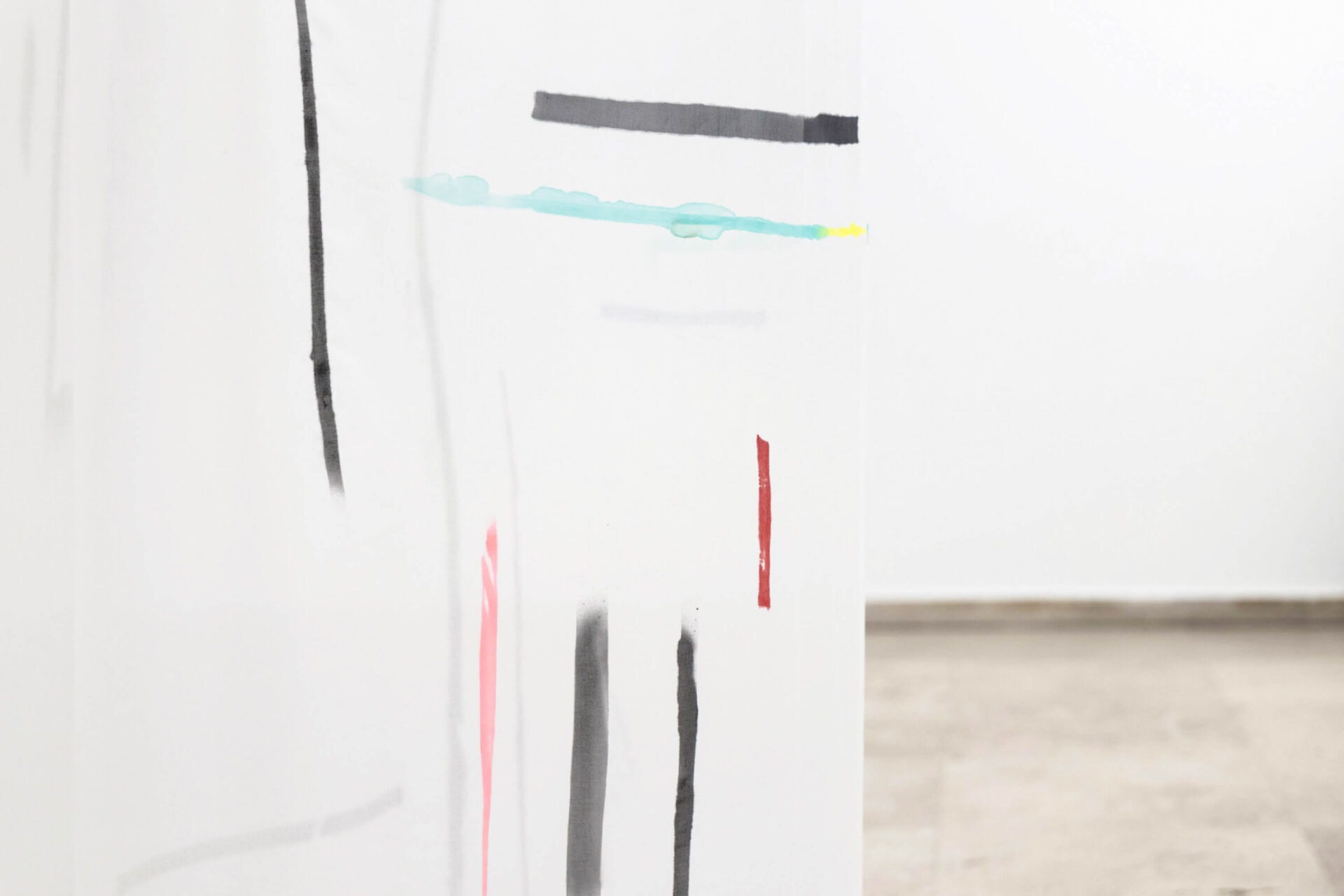
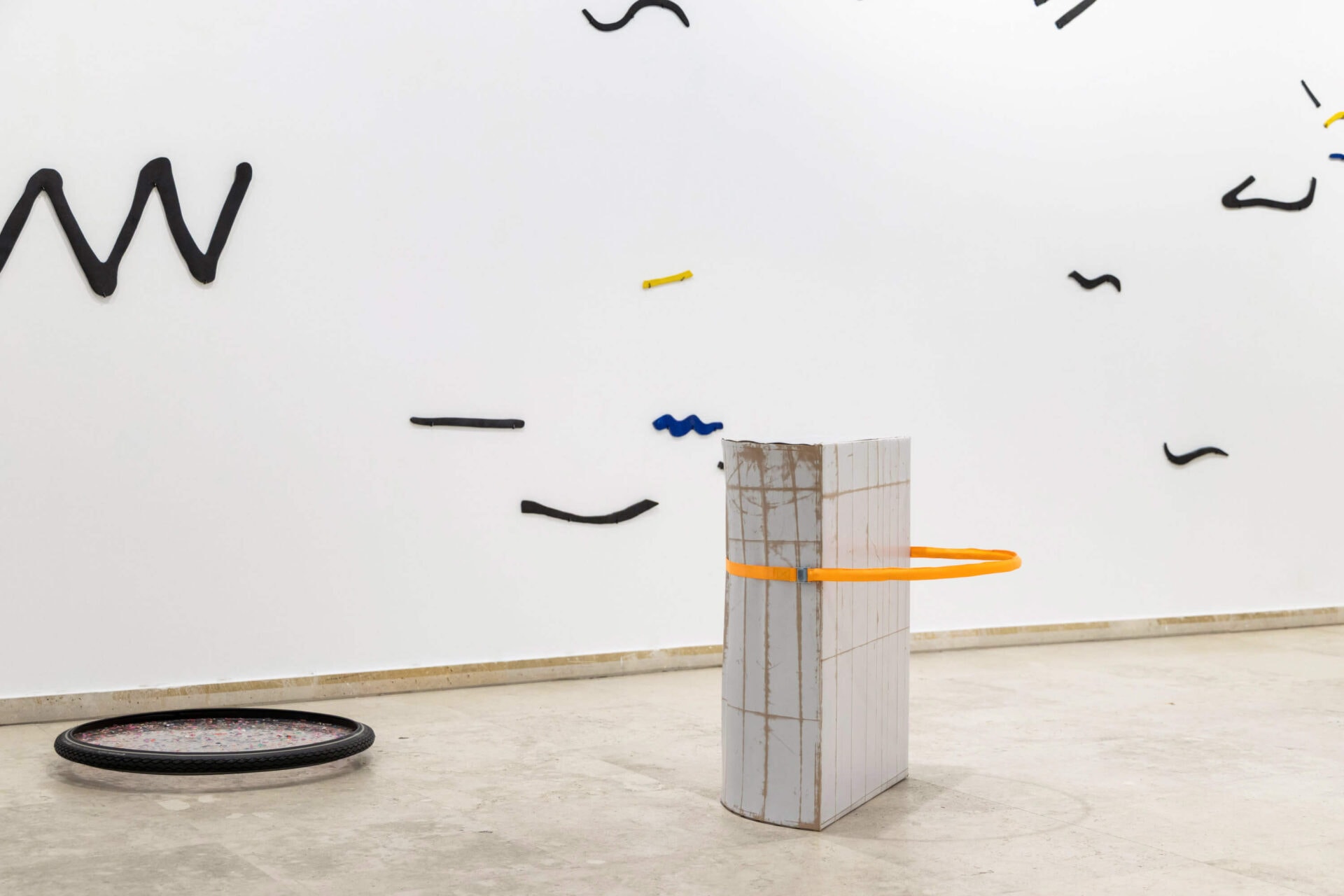
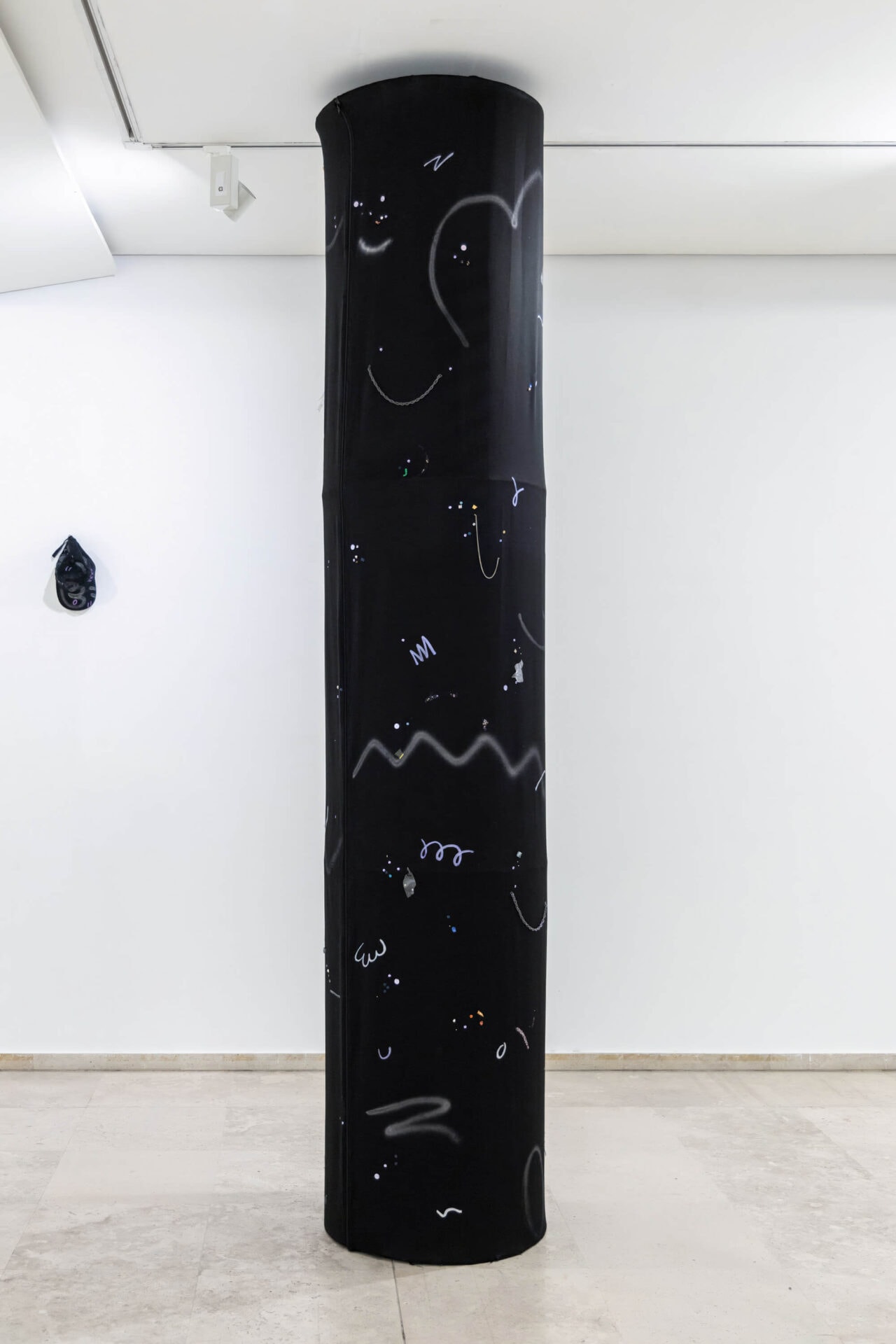
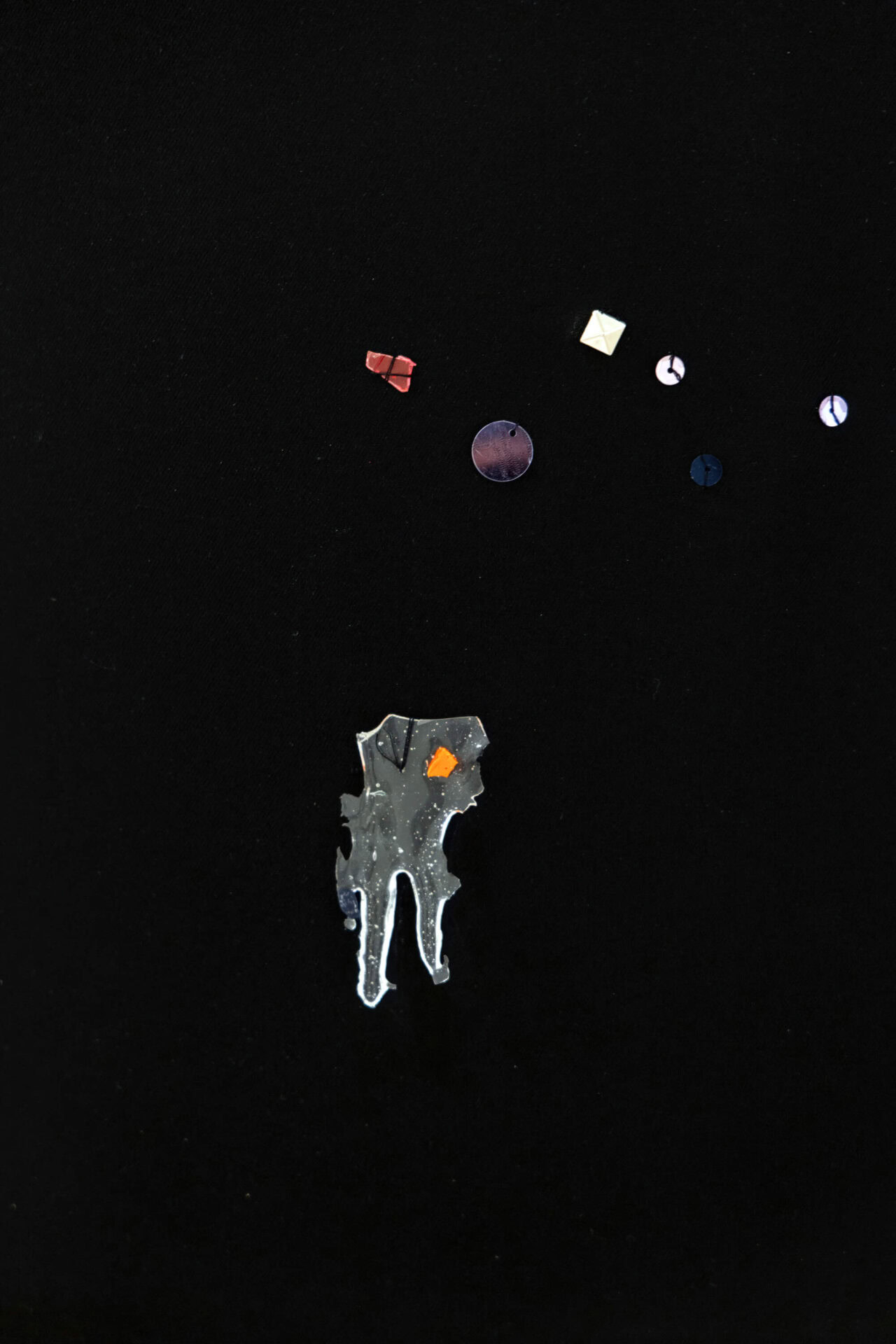
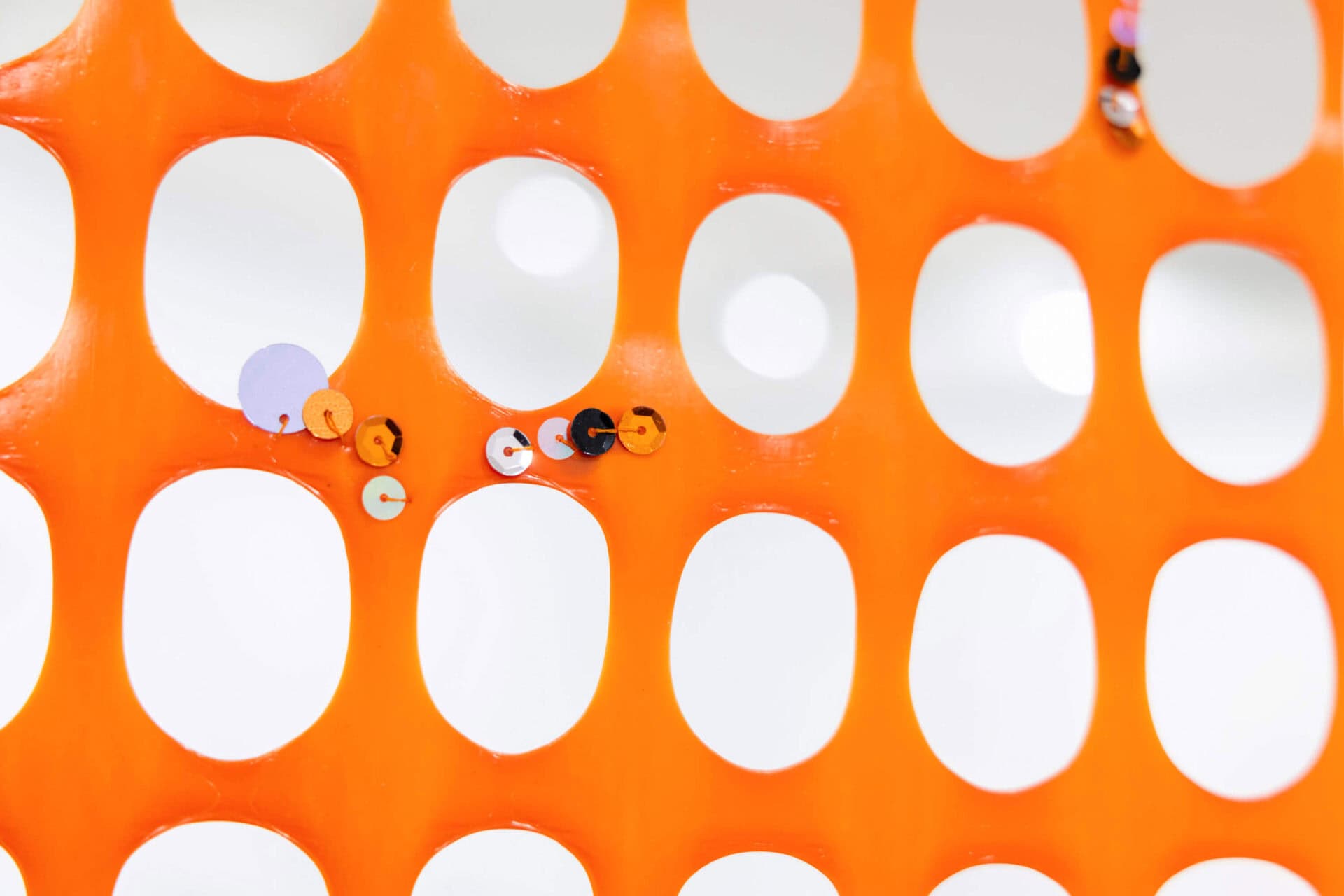
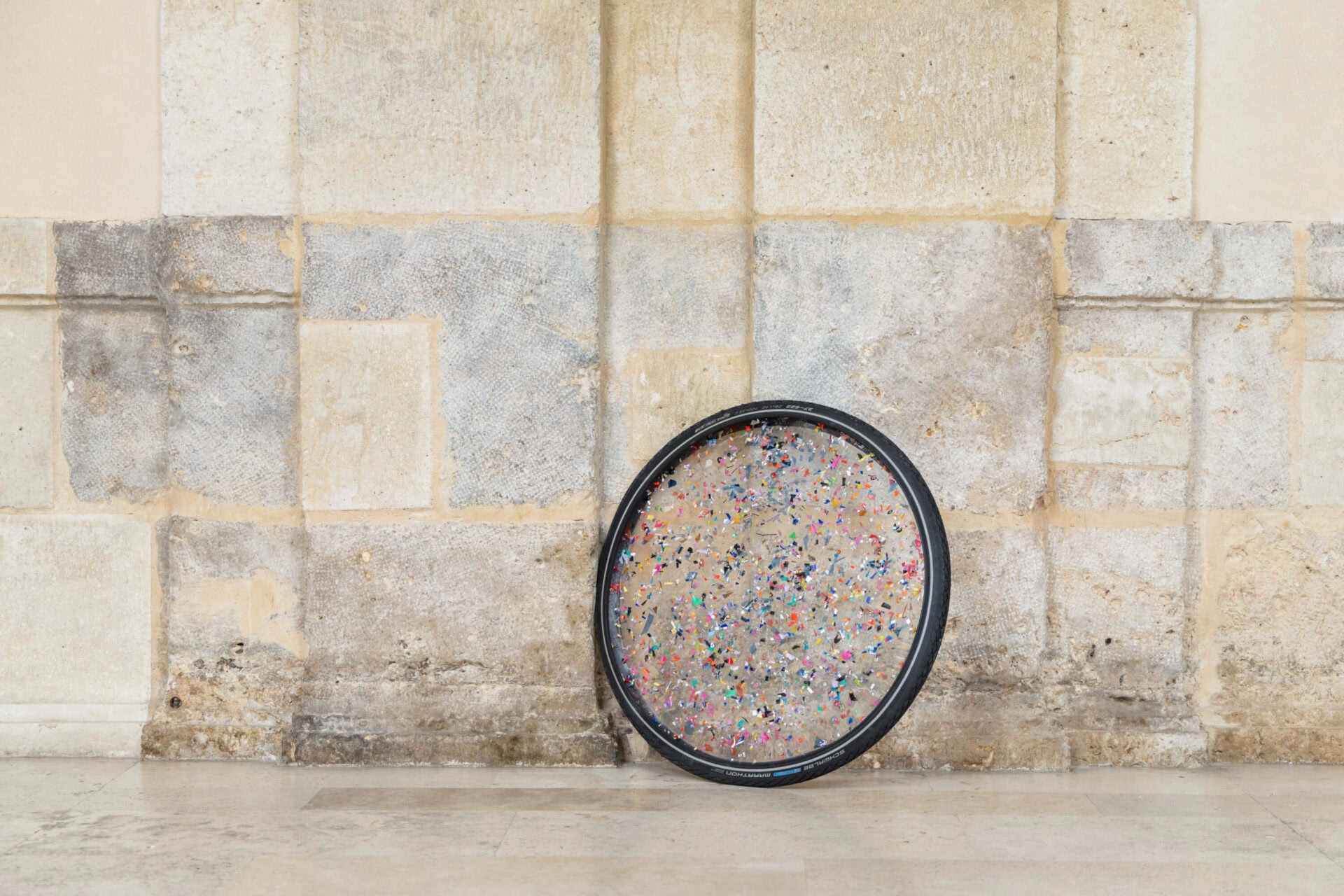
In the installation, she tries to complete these broken monuments again, through material speculation. One of the works is a leatherette half-cylinder, hugging its counterpart with a strap. The highest of the four, consist of a black plastic base, and a black fabric that the artist has decorated with contemporary ornaments like chains, fragments of patterns, lines, geometric shapes, and sequins. The lowest pillar of all is a clear transparent round, flat circle made from found and processed fragments and remains such as pulverized beer bottles, plastic remains and confetti.
With Ignored in Public, Patricia Sandonis questions the architectural and monumental function of a column as a way to remember. Columns exist to lift, to steady, to uphold. They evoke a sense of importance, permanence and support, often standing as symbols of stability and authority. This authority is reflected in the power they have over the bodies of the people who look at them, who have to tilt their heads back in order to see them, wrap their bodies around.
To stand tall is to be seen; to be seen is the start of being remembered. Without their height, what purpose remains? They start fading away, disappearing into the periphery of attention, easily ignored, broken down columns remind us that something had significance. And, in their remains, signal that something has enough significance to be remembered.
Curatorial Text for the exhibition “Uncertainty in Consensus” at Museo Patio Herreriano, Valladolid, 2025.
Cleo Wächter & Lusin Reinsch
