Keep Up Appearances, 2024
Back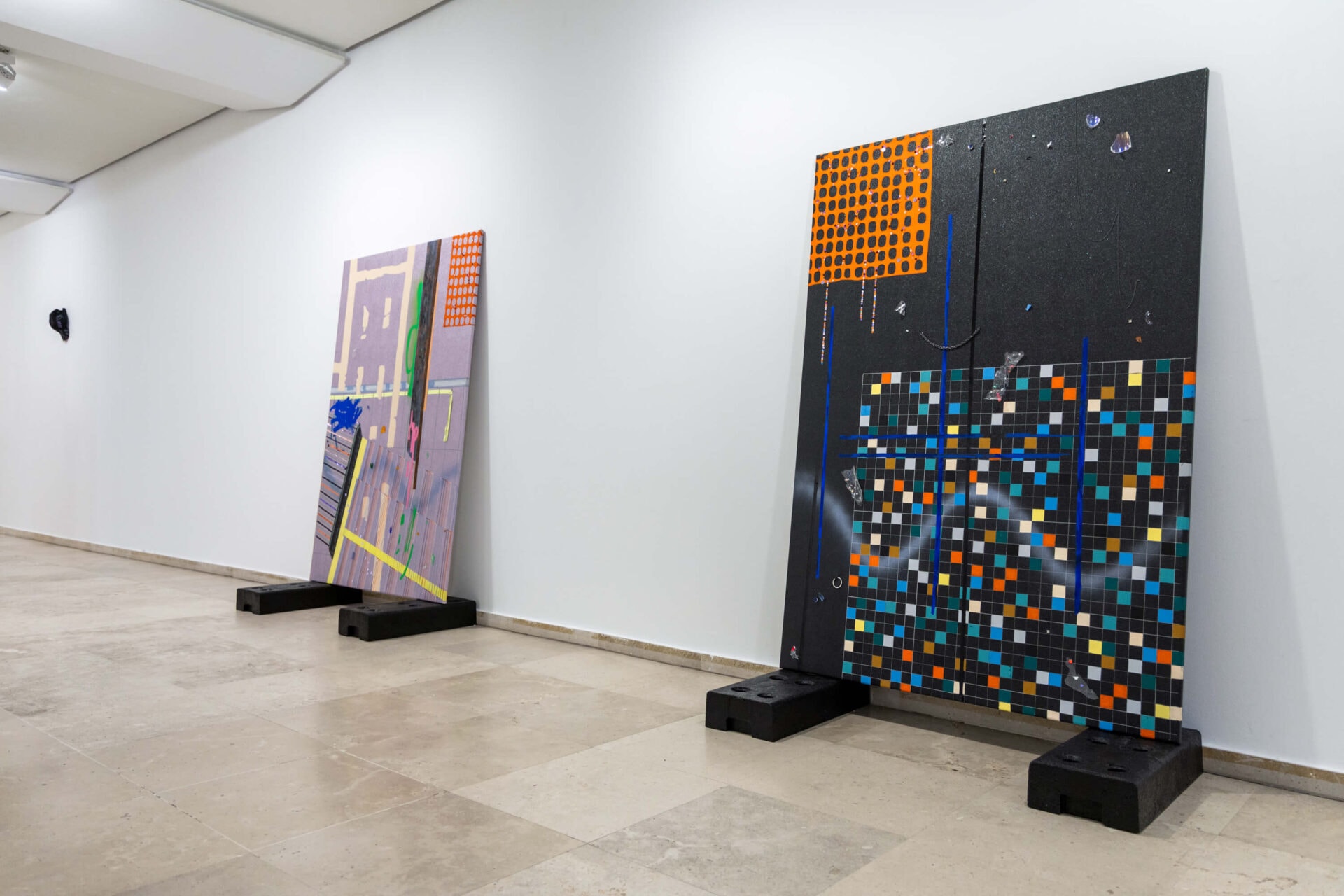
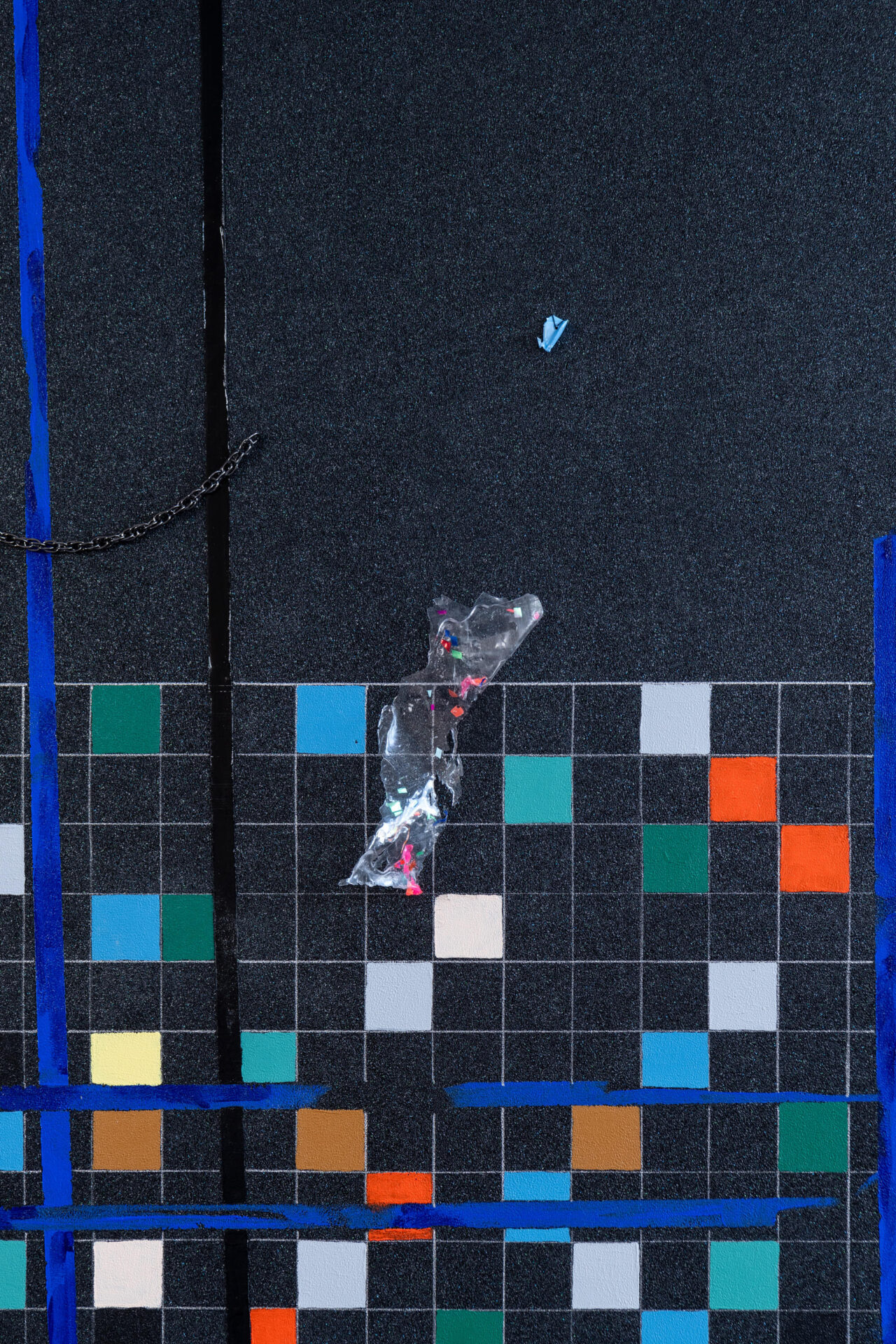
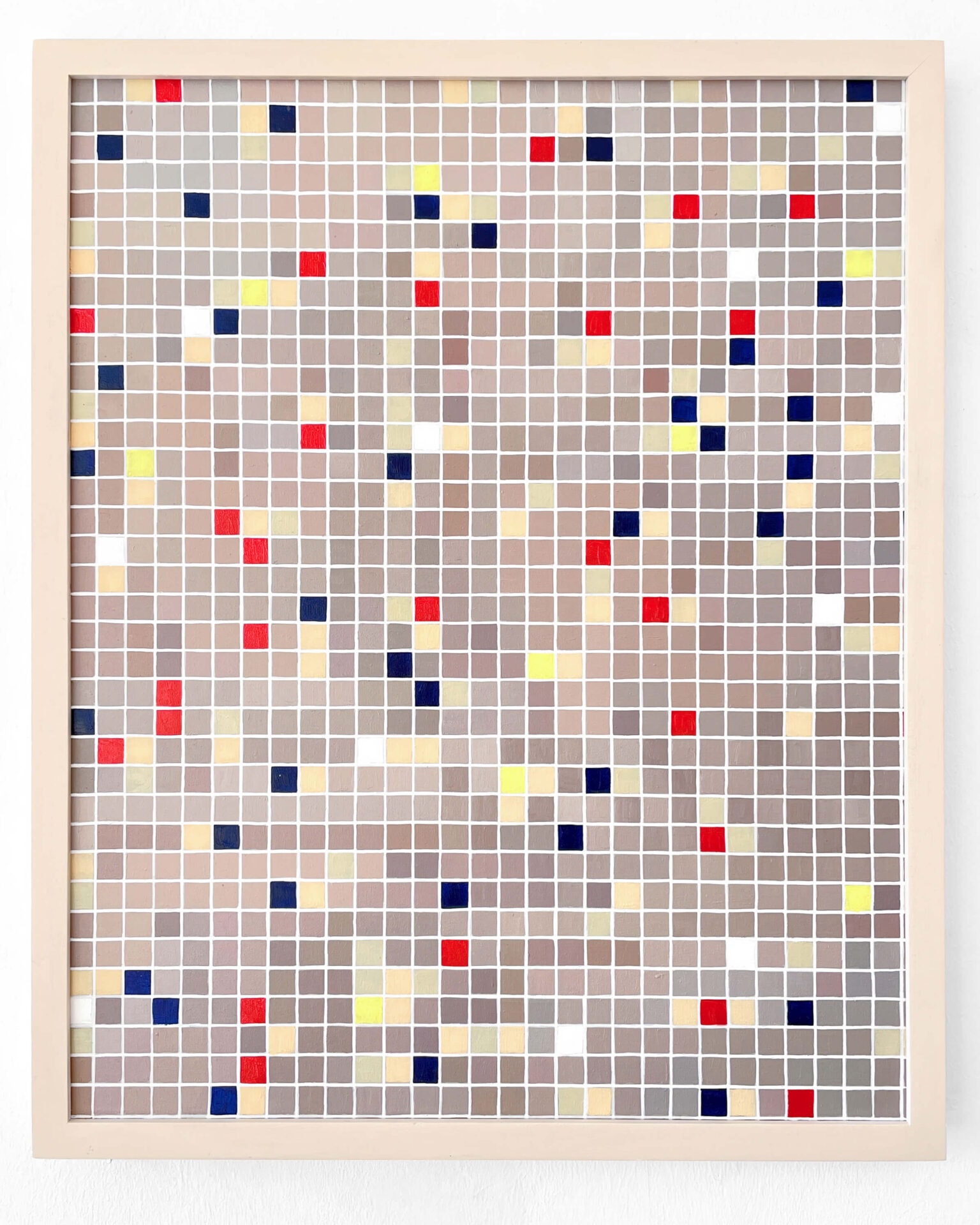
Some entrance halls are made with mosaics of small tiles. They look like concrete art with a bell placed on them.
I have tried many times in vain to find an order in the placement of these little colored squares. These randomly placed tiles give the appearance of uniformity and a mathematical control that they lack.
I imagine that someone made a sketch of how the tiles had to be placed to avoid the mathematical order.
Someone planned the randomness with precision.
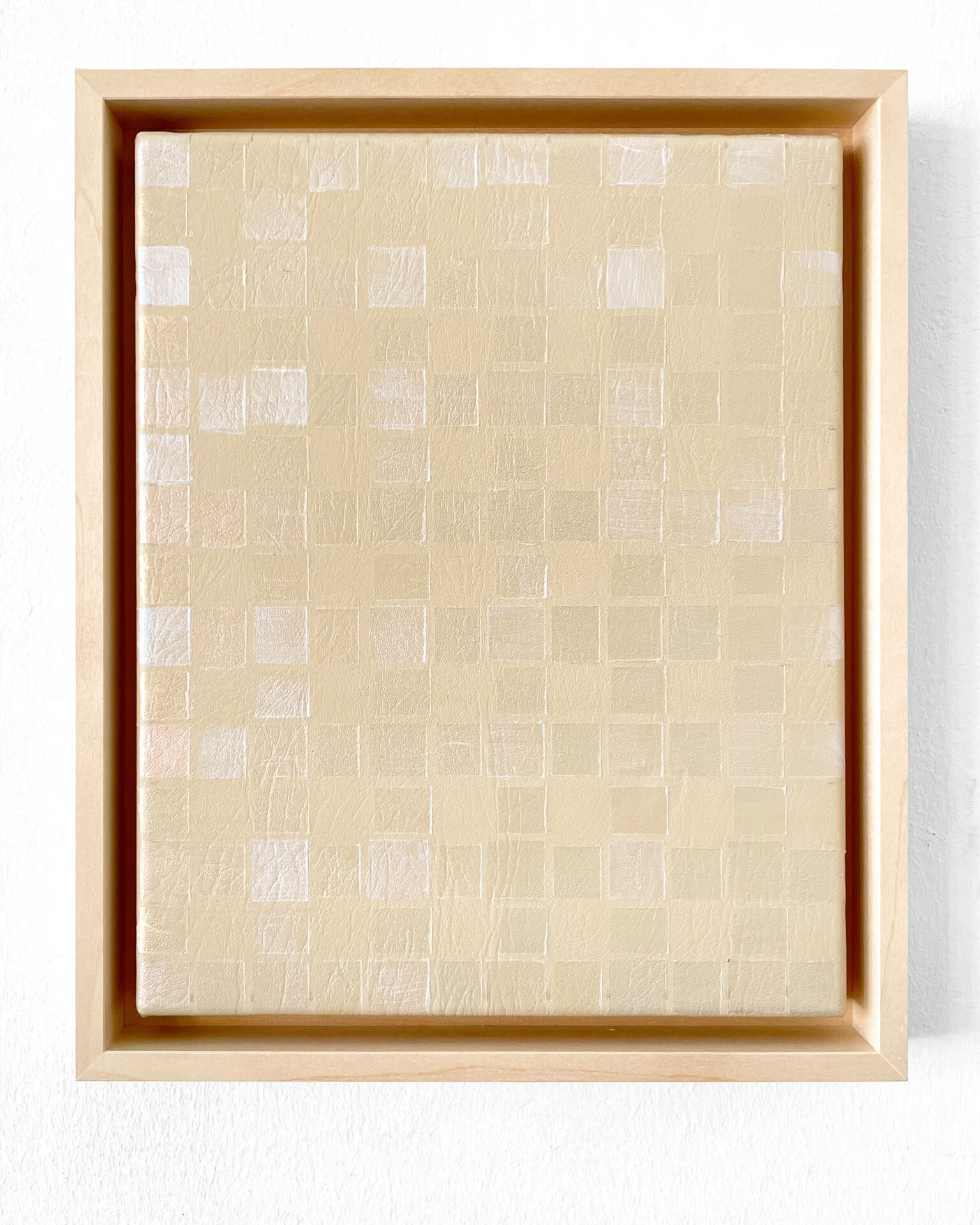
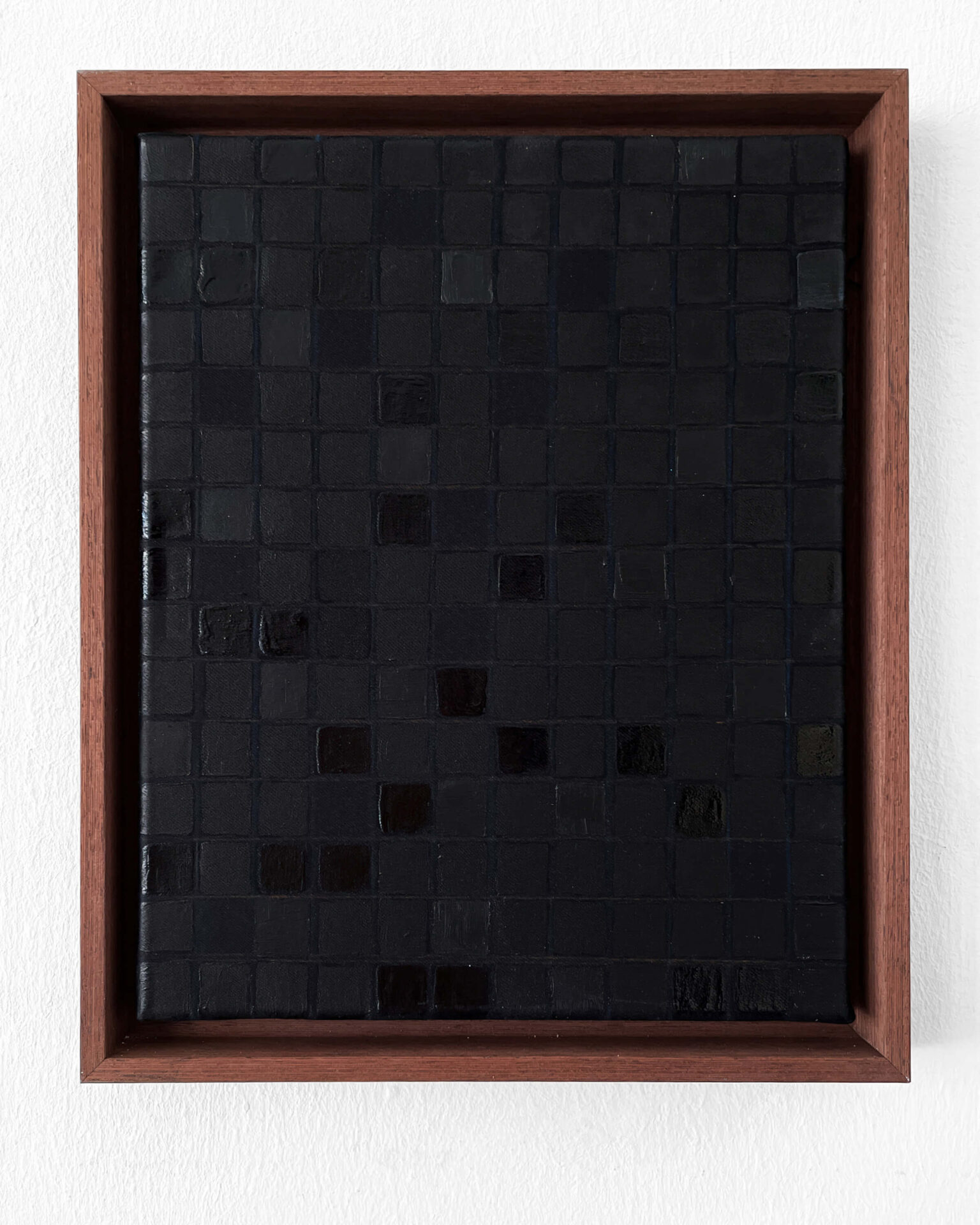
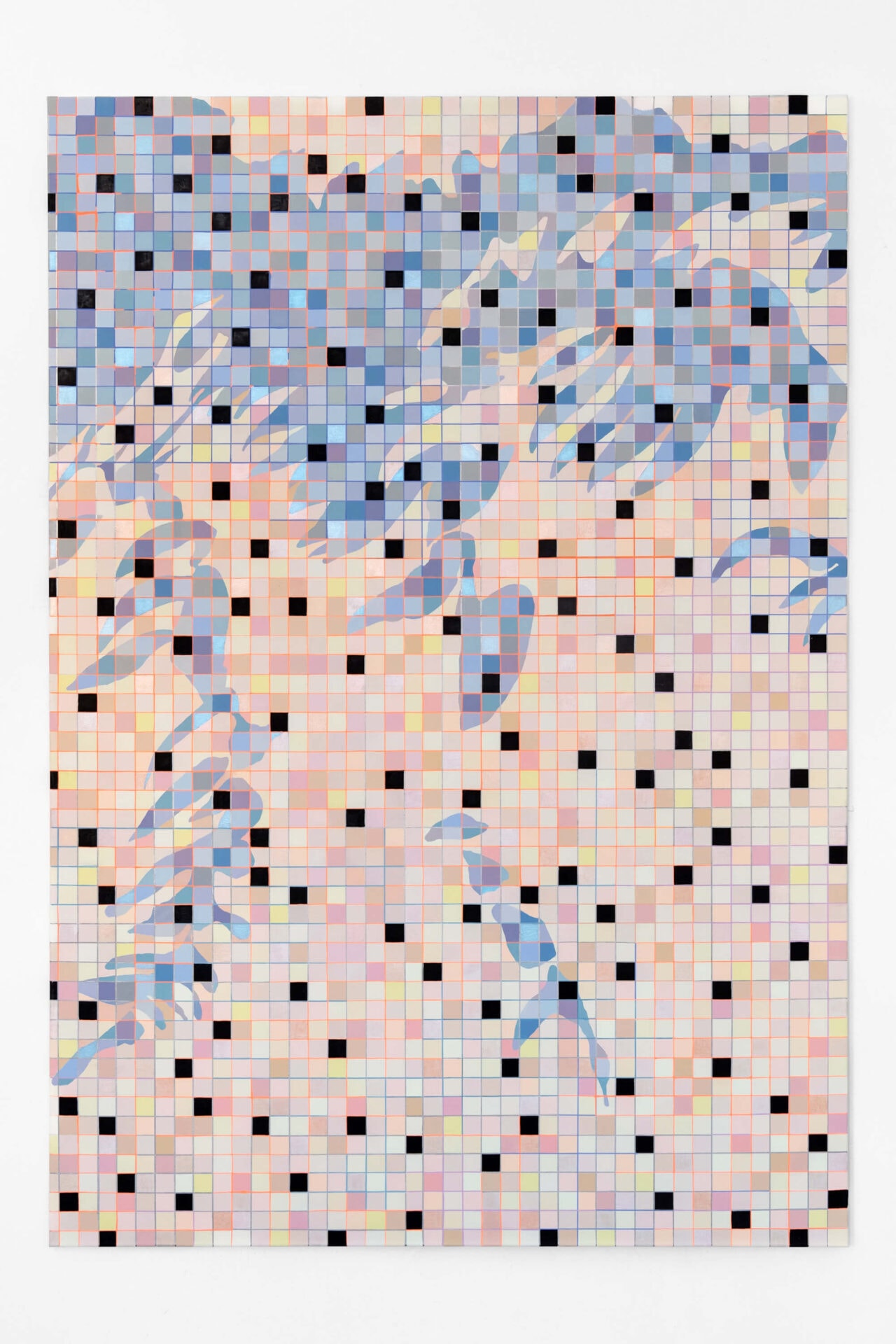
At night, streetlights, wind and trees team up to change the colour of building facades.
The streetlights screen their orange light on white and grey, creating an infinite number of ochre and pink tones.
The trees project their shadows, which are not grey, but form a whole pantone of blues and violets.
The wind makes it possible for all these colours to change position and jump from one wall to another.
Only black remains static, unchanging, and seems to have more power than the wind, the light and the trees. Black is not in the visible spectrum of light.
Black is the only colour that can exist if light ceased to exist.
The night could be the day, if we compare it with the darkness of black.
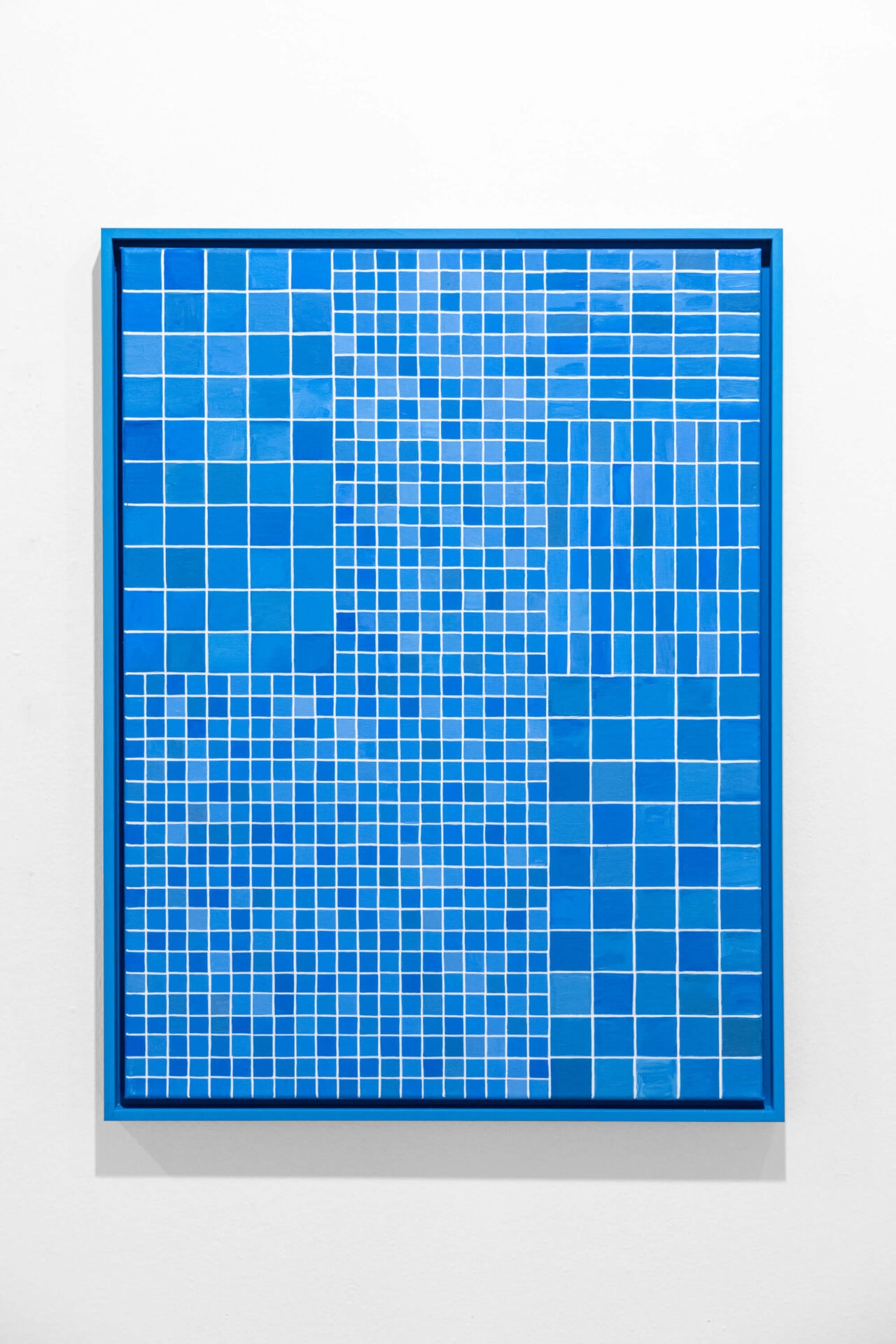
The Palace of Tears is a customs pavilion that was built by the GDR in the 1960s and was used as a transit point from East to West Berlin.
People said goodbye to their loved ones here without even knowing if they would see each other again.
The word “to separate” (in German Trennen) is pronounced the same as the word “tears” (Tränen).
Although they do not share an etymology, there is something sad about separations.
The Palace of Tears has large windows and, on its facade, you can see the typical mosaic tiling of the 1960s.
These tiles are blue and of different sizes and shapes.
They are rectangular teardrops.
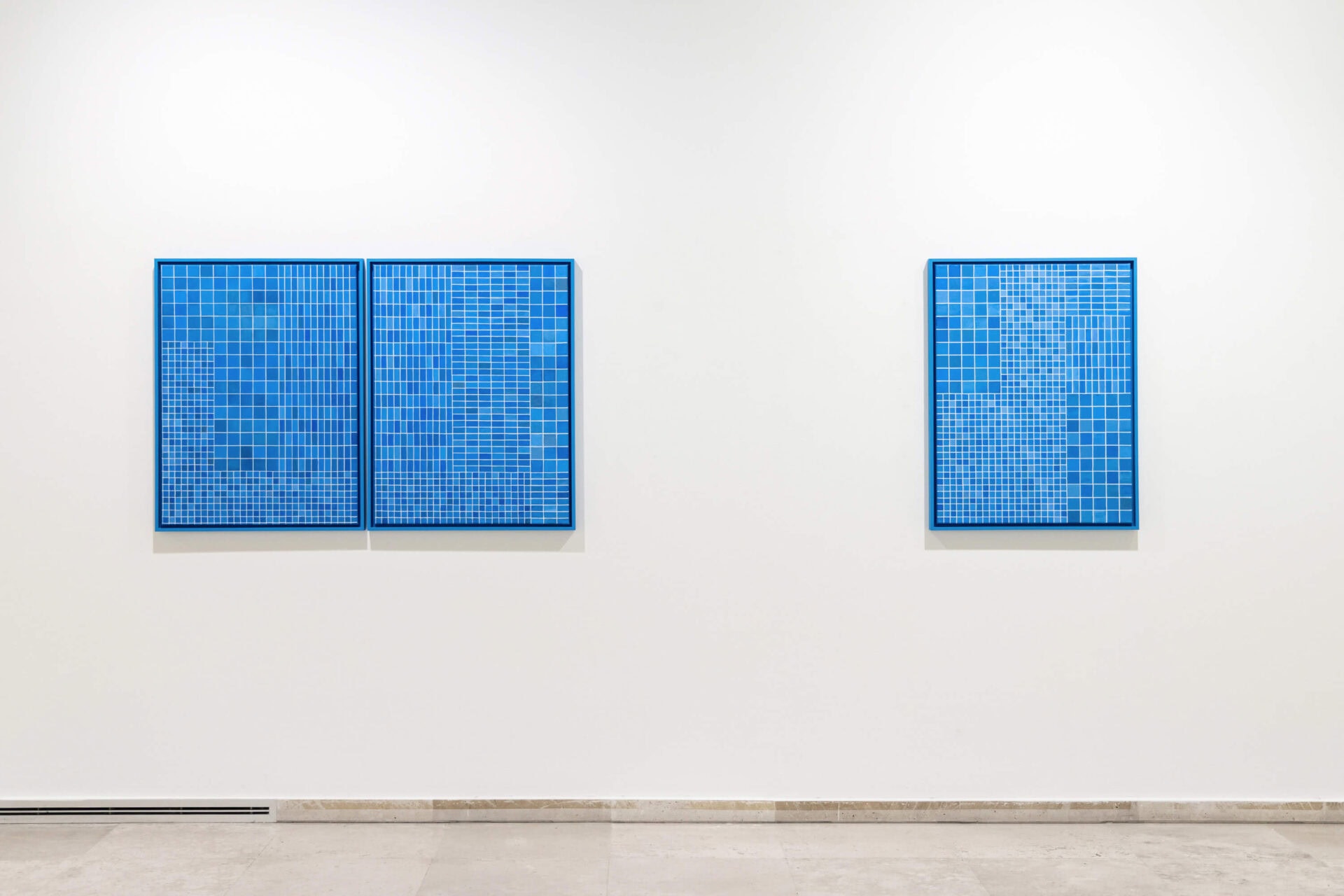
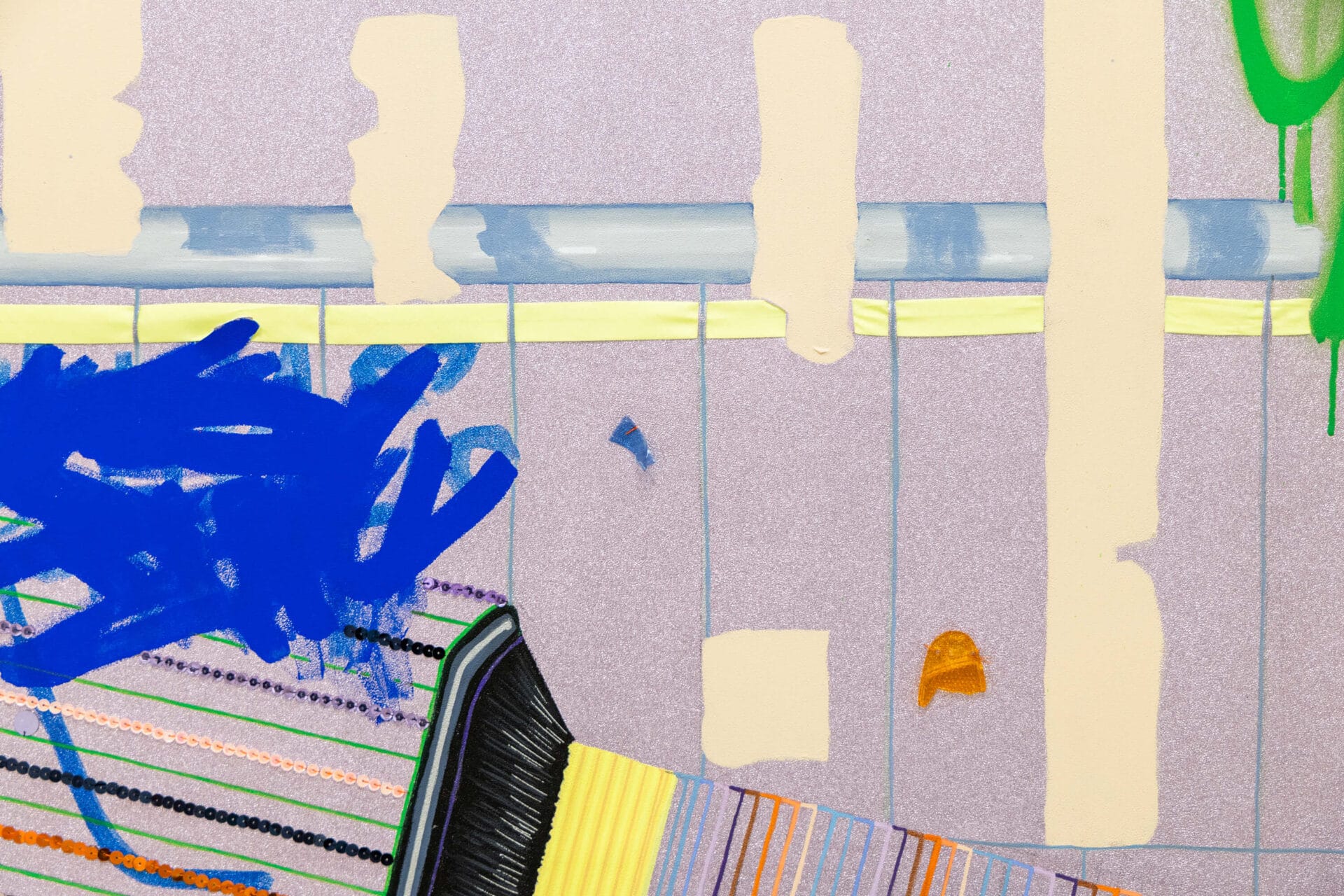
For her paintings Keep Up Appearances, Patricia Sandonis fuses together recognizable elements from the thresholds between the private and the public into collage-like images. Depicting elements from construction sites and tiles once more – this time smaller, mosaic-like, adorning house entrances. Patricia Sandonis tries to uncover an order in this mosaics, never being granted ‘access’ to a logic in them.
She paints these elements both abstract and figurative. Through objects adhered to the fabric, she gives the canvas another layer of three dimensionality. Through this interplay she raises questions about the tradition of landscape-painting, in which the urban space, compared to the natural realm, has less of a footing. As it is lacking classical aesthetics, and perhaps leaves too little space for the viewer to read themselves into. More often, we see photography used as a medium for portraying public space, because it parallels its fast-paced dynamics. Within this genre, she creates her own niche.
The paintings are displayed on black-painted construction-site fence stones. These heavy plinths act as ‘feet’ for the canvases, giving them a sense of mobility and autonomy while connecting them to the materials they reference and further emphasize the dialog between infrastructure and impermanence.
